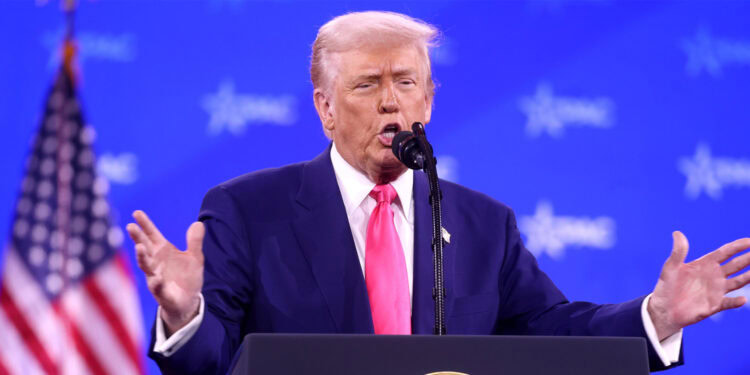
Trump’s speeches stump AI: Study reveals ChatGPT’s struggle with metaphors
Can an AI understand a political metaphor? Researchers pitted ChatGPT against the speeches of Donald Trump to find out. The model showed moderate success in detection but ultimately struggled with context, highlighting the current limits of automated language analysis.
Read moreDetails
New research shows the psychological toll of the 2024 presidential election
Among young adults, stress from election news was linked to higher risks of depression and anxiety, while pre-election anticipatory stress was linked to depression only. Stress about the election outcome was not associated with either condition.
Read moreDetails
Liberals and conservatives live differently — but people think the divide is even bigger than it is
New research finds that students with different political identities tend to engage in slightly different everyday behaviors. But students dramatically overestimate how much liberals and conservatives differ, fueling a distorted sense of social and political division.
Read moreDetails
Testosterone shifts political preferences in weakly affiliated Democratic men, study finds
What if the key to swaying a swing voter lies in their biology? New research found giving testosterone to weakly affiliated Democratic men made them less loyal to their party and more open to Republicans, revealing a potential hormonal link...
Read moreDetails
National narcissism linked to emotional impairments and dehumanization, new study finds
A new study suggests that people who see their nation as uniquely important often struggle with recognizing emotions and experience more anger and contempt—factors that may help explain why they’re more likely to dehumanize both outsiders and fellow citizens.
Read moreDetails
Viral AI-images highlight how Trump engages in “victimcould,” scholar argues
How can one of the world's most powerful men also be its biggest victim? A new paper argues it’s a political strategy based on hypothetical, not actual, harm—a concept the author calls “victimcould” used to justify present-day aggression.
Read moreDetails
Scientists are uncovering more and more unsettling facts about our politics
Why has politics become so personal? The answers may lie in our minds. These 13 studies from the new science of political behavior reveal the hidden psychological forces—from personality to primal fear—that are driving us further apart.
Read moreDetails
Despite political tensions, belief in an impending U.S. civil war remains low
A new national survey finds that only a small fraction of Americans believe civil war is likely or necessary.
Read moreDetails
Student loan debt doesn’t deter civic engagement — it may actually drive it, new research suggests
Americans with student loan debt are more likely to vote and engage in political activities than those without debt, likely because they see government as responsible and capable of addressing their financial burden through policy change.
Read moreDetails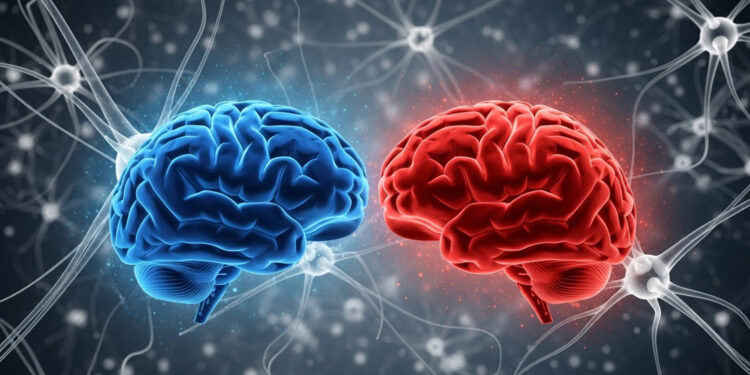
New research suggests the conservative mental health advantage is a myth
Do conservatives really have better mental well-being than liberals? A new study suggests the answer depends entirely on how you ask. The well-known ideological gap disappears when "mental health" is replaced with the less-stigmatized phrase "overall mood."
Read moreDetails
People who think “everyone agrees with me” are more likely to support populism
People who wrongly believe that most others share their political views are more likely to support populist ideas, according to a new study. These false beliefs can erode trust in democratic institutions and fuel resentment toward political elites.
Read moreDetails
Radical leaders inspire stronger devotion because they make followers feel significant, study finds
A new study finds that voters are more motivated by radical political leaders than moderates, because supporting bold causes makes them feel personally significant—driving greater activism, sacrifice, and long-term engagement across elections in the United States and Poland.
Read moreDetails
New study sheds light on the psychological roots of collective violence
A new study from Lebanon finds that people with authoritarian beliefs tend to oppose violence against political leaders, while those high in social dominance orientation are more likely to support violence against rival group members.
Read moreDetails
Epistemic mistrust and dogmatism predict preference for authoritarian-looking leaders
A new study suggests that the way people learn to trust others early in life can shape their political ideology and preference for strong, dominant leaders—though not directly, but through dogmatic thinking and broader political attitudes.
Read moreDetails
Republican women and Democratic men often break with party lines on gun policy
New research shows that Americans’ views on gun policy are shaped by the intersection of gender and partisanship, with Republican women and Democratic men often expressing positions that differ from those typically associated with their party.
Read moreDetails