
Early brain responses to political leaders’ faces appear unaffected by partisanship
New research suggests that while the brain quickly distinguishes politicians from strangers, it doesn’t initially register political allegiance. The findings challenge assumptions about how early partisan bias kicks in during perception and suggest that party loyalty may emerge later.
Read moreDetails
Intellectual humility is linked to less political and religious polarization across the board
A large online study indicates that intellectual humility is linked to less hostility toward political and religious opponents. The effect was seen across political parties and belief systems, and persisted even after controlling for the strength of participants’ convictions.
Read moreDetails
Populism may act as a “thermometer” for democratic health
Long-term data from Britain and the Netherlands reveal that citizens’ populist beliefs rise and fall alongside changes in democratic satisfaction. The research challenges the idea that populist attitudes are static traits and highlights their potential responsiveness to political reforms.
Read moreDetails
Professors who use safe space language seen as more caring—and more authoritarian
A new study finds that safe space statements can make students feel more comfortable and open in the classroom—but also make instructors seem more liberal and authoritarian. Trigger warnings, by contrast, had no meaningful impact on students’ perceptions.
Read moreDetails
Worsening economic conditions fuel anti-immigrant conspiracy beliefs and support for violence
Belief in anti-immigrant conspiracies may be fueled by financial hardship and a sense of societal breakdown, according to new research. Across six studies, economic stress predicted support for discriminatory policies and even violent actions against non-European immigrants.
Read moreDetails
Most Americans prefer a more diverse nation than the one they currently live in
Despite growing media focus on demographic anxiety and ethnonationalism, a new study finds most Americans envision a future United States that is more ethnically, racially, and religiously diverse. Very few support the idea of a homogenous national identity.
Read moreDetails
Study: Racist and sexist views were linked long before Obama
A new study analyzing two decades of election data finds that racial resentment and sexist attitudes among white Americans are consistently linked. The findings suggest these views stem from a shared worldview, not just recent political events or figures.
Read moreDetails
Conservatives are more receptive to AI-generated recommendations than liberals, study finds
Contrary to popular belief, conservatives may be more receptive to AI in everyday life. A series of studies finds that conservatives are more likely than liberals to accept AI-generated recommendations.
Read moreDetails
Congressional speeches have shifted away from evidence-based rhetoric
A new study analyzing over eight million congressional speeches reveals a sharp decline in evidence-based language since the 1970s, raising concerns about rising political polarization, legislative gridlock, and growing income inequality in the United States.
Read moreDetails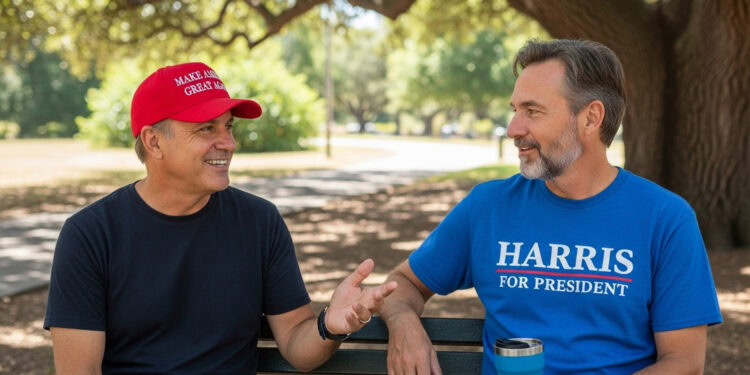
Cross-party friendships are shockingly rare in the United States, study suggests
Most American friendships happen between people who share similar political beliefs, according to new research. But when political disagreement does exist between friends, it’s associated with less negative views of political opponents—even if the friendships themselves are a little less...
Read moreDetails
Study shows Congressional stock gains come at democracy’s expense
New research shows that when Americans learn about members of Congress profiting from stock trades, they view lawmakers as more corrupt and less legitimate—and become less willing to follow the laws Congress passes.
Read moreDetails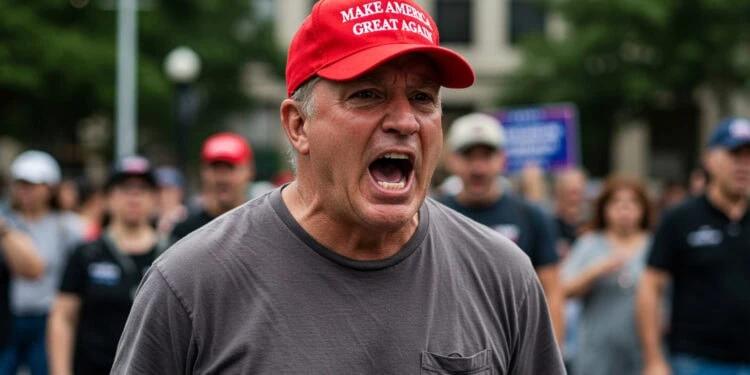
Trump supporters report higher levels of psychopathy, manipulativeness, callousness, and narcissism
Support for Donald Trump is linked to darker personality traits, including increased psychopathy and decreased empathy, new research finds. The study also connects conservative political beliefs to lower benevolence, suggesting personality may shape how people engage with politics and ideology.
Read moreDetails
These psychologists correctly predicted Trump’s 2024 victory based on a single factor
In a rare example of psychological research predicting an election before it happened, a team of researchers used campaign language to anticipate Donald Trump’s 2024 victory—and got it right.
Read moreDetails
Study: 2024 presidential campaign negatively affected sleep for 17% of U.S. adults
A new nationally representative study reveals that the 2024 presidential campaign negatively impacted the sleep of about 45 million U.S. adults. The findings highlight how political stress can disrupt sleep health months before election day, especially for certain demographic groups.
Read moreDetails
Want to bridge the partisan gap? New research points to a key social factor
New research explores conditions that may ease discomfort in cross-partisan engagement. A study published in Social Psychological and Personality Science indicates people are more receptive to befriending political opposites when the latter possess diverse social circles.
Read moreDetails