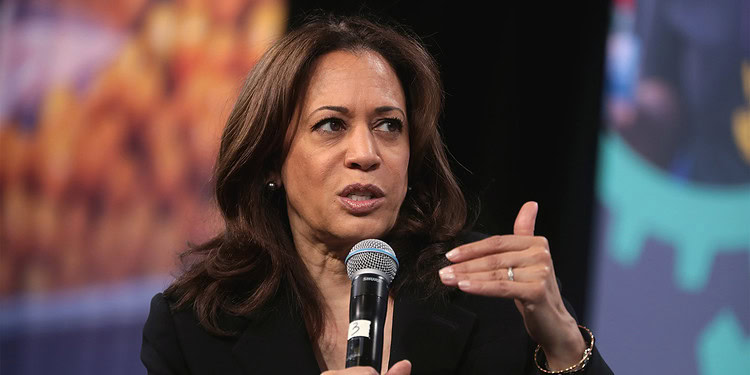

If U.S. voters elect Kamala Harris – a Black, Asian American woman – president, it would be historic on multiple levels. This is now a real possibility due to voters’ positively evolving stereotypes of women politicians.
Stereotypes have long hindered female candidates, casting them as emotional, weak and sensitive. But now our political science research shows that voters in the U.S. increasingly see women leaders as synonymous with political leadership – and as more effective than men politicians.
This transformation reflects a broader change in what voters expect in political leaders. They are now more likely to see a woman candidate as a better “fit” for public office. This might help pave the way for Harris to break through the highest glass ceiling in U.S. politics.
The classic double bind
Gender stereotypes are the assumptions and expectations people have about men and women. They traditionally present an obstacle for women leaders, including in politics.
Among the many barriers to a woman becoming president in the U.S. are voters’ gender stereotypes. Men are generally assumed to have masculine traits such as being ambitious and competitive, while women are assumed to possess feminine traits such as being warm and compassionate. In applying gender stereotypes to politicians, voters end up with very different expectations for men and women candidates.
This presents a classic double bind for women leaders. If they behave like leaders and act dominantly and assertively, they violate expectations of femininity. But if they behave in a stereotypical way, they are not seen as strong leaders.
The double bind extends to politics. It was long the case that stereotypes of men politicians, but not women politicians, aligned with the leadership qualities that voters desire in political leaders. These traits include competence, strong leadership, empathy and integrity. A 2011 study showed that stereotypes of women politicians lacked clarity, meaning people had no clear expectations. Voters also did not see women politicians in alignment with those same four leadership qualities that voters seek.
But by 2021, prominent women political leaders such as Hillary Clinton, Nikki Haley and Nancy Pelosi had reshaped the landscape for women seeking office by shaping and solidifying public expectations.
More women politicians in the spotlight
More women have assumed political leadership roles in the U.S. over the past decade than in previous decades. The number of women in Congress increased from 90 to 145 between the 111th Congress, which met from 2009 to 2011, to the 117th Congress, which met from 2021 to 2023.
In addition, high-profile women politicians such as Democrats Pelosi and Clinton, as well as Liz Cheney, a Republican, have received considerable attention from both the media and the electorate. Gender stereotypes about women politicians evolved from being ambiguous to becoming both well defined and positive as voters grew more familiar with them. This has created a political landscape for Harris today that is notably different from the early 2010s.
We are political scientists whose research examines how gender stereotypes affect women’s political underrepresentation. In 2021, we conducted a study of how voters’ gender stereotypes of politicians had evolved over the previous decade. These are the three main lessons:
1. Stereotypes of women politicians are increasingly positive
A decade ago, people did not agree on the traits that defined women politicians. While some people described them as tough, others thought they were weak. Similarly, some reported them as rational, while others saw them as unable to separate feelings from ideas. There were no traits that large groups of people agreed upon to describe women politicians.
But our study shows that voters now hold clear and positive stereotypes of them.
When asked about the traits they associate with women politicians, respondents listed positive traits such as intelligent, rational, analytical, ambitious and moral. At the same time, women politicians are least associated with negative traits such as being weak and spineless.
2. Stereotypes of men politicians have shifted to increased negativity and distrust
Male politicians were previously seen as confident, well educated, charismatic and driven. But there’s bad news for men in politics: This perception has shifted. Our study revealed that stereotypes of male politicians became much more negative over the decade we studied.
Today, male politicians are more commonly viewed as power-hungry, selfish, manipulative and self-interested. They are least associated with traits such as being sympathetic or caring about “people like me.” This indicates that voters have become more negative and distrustful toward male politicians.
3. Women politicians have gained ground on leadership perceptions, surpassing men politicians
In the past, stereotypes of women politicians were incompatible with leadership stereotypes. But our study shows that this mismatch has subsided. In fact, between 2011 and 2021, scores for women politicians increased on all four leadership traits valued by voters: competence, leadership, empathy and integrity.
Men politicians, in contrast, have lost ground on all four leadership traits. Women politicians now surpass men politicians in three out of the four leadership traits: competence, empathy and integrity. Expectations of men politicians concerning the fourth trait, strong leadership, are now equal to those of female politicians.
Kamala Harris may benefit
Gender stereotypes have long hindered women seeking political office, but more women in prominent leadership positions have fostered positive stereotype change.
Granted, highly visible women leaders such as Pelosi and Clinton excite both admiration and intense dislike. But seeing them and many other examples in their wake has familiarized voters with women holding power in politics. Voters are thus now more likely to view women candidates like Harris as fitting into leadership roles such as the presidency.
With growing distrust in politics, and of male politicians specifically, women political leaders – who are viewed as agents of change – may have an opportunity to restore trust in politics.
This article is republished from The Conversation under a Creative Commons license. Read the original article.