Subscribe
The latest psychology and neuroscience discoveries.
My Account
  • Mental Health
  • Social Psychology
  • Cognitive Science
  • Neuroscience
  • About
No Result
View All Result
PsyPost
PsyPost
No Result
View All Result
Home Exclusive Mental Health

Infants at risk for autism rely on more information from the head when following gaze, study finds

by PsyPost
August 2, 2016
in Mental Health
Photo credit: Wellwin Kwok

Photo credit: Wellwin Kwok

Share on TwitterShare on Facebook

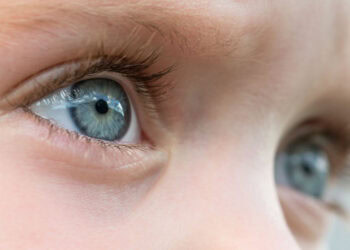
Infants at risk for autism rely on more information from the head when following gaze, according to a study published this January in Molecular Autism. The study highlights early disruptions to joint attention and provides the potential for identifying early signs of autism spectrum disorder (ASD) development.

Joint attention involves the sharing of attention between individuals toward a common object. It is especially important for infants in forming the basis for later development in social cognition and language. For example, a parent may look at their baby and then look towards a toy on the floor. By following their parent’s gaze along the floor, the baby is able to find the toy, and infants typically become competent at this before their first birthday. Later on, a child will learn that gaze direction often provides information as to what is going on inside someone’s mind.

Children with ASD display social communication impairments, and it has been proposed that this might be linked to disruptions to the development of joint attention. Given that ASD is rarely diagnosed before the age of 2–3 years, identifying impairments to joint attention provides the potential for identifying early signs of the disorder’s development.

The study, led by Emilia Thorup of Uppsala University in Sweden, used eye tracking software to assess the gaze following  of 10-month-old babies with a familial risk for developing autism. 47 of the infants were high-risk (at least one older full sibling with an ASD diagnosis) and a control group of 17 infants were low-risk (no familial history of ASD). This was based on research indicating that in a family with one child diagnosed with ASD, the probability of an ASD diagnosis in a sibling is more than ten times higher than in the general population.

During the study, the experimenter performed a live puppet show while the baby’s gaze was recorded. There were two conditions: one in which the experimenter moved both their eyes and head between the two puppets, and one that involved movement of only the eyes.

The results revealed that the high-risk infants performed worse in the condition that involved only eye movement, whereas low-risk infants followed gaze as accurately in both conditions. The researchers concluded that “infants at risk for ASD may rely disproportionately on information from the head when following gaze”.  The study also highlights the potential for identifying early signs of ASD development.

Google News Preferences Add PsyPost to your preferred sources
Previous Post

Natural scenery may reduce attentional effort when starting mindfulness practice

Next Post

New microfluidic chip replicates muscle-nerve connection

RELATED

New psychology study sheds light on mysterious “feelings of presence” during isolation
Alzheimer's Disease

How stimulating the vagus nerve could protect the brain from Alzheimer’s disease

April 6, 2026
Dysfunctional parenting may lead to adult problems through personality traits like low conscientiousness
Mental Health

“Falling back” makes us more miserable than “springing forward,” new study finds

April 5, 2026
Mindfulness may be a window into brain health in early Alzheimer’s risk
Dementia

The four types of dementia most people don’t know exist

April 5, 2026
Mystical beliefs predict a meaningful life even without organized religion
Depression

Higher testosterone linked to increased suicide risk in depressed teenage boys

April 4, 2026
“Only the tip of the iceberg:” Misophonia may reflect deeper psychological realities
Mental Health

The hidden mental cost of emotional rigidity in young adults

April 4, 2026
People high in psychopathy and low in cognitive ability are the most politically active online, study finds
Autism

Autism risk genes are shared across human ancestries, large genome study reveals

April 2, 2026
Paternal psychological strengths linked to lower maternal inflammation in married couples
Depression

Scientists identify a brain signal that reveals whether depression therapies will work

April 2, 2026
Individuals with bipolar disorder face increased cardiovascular risk, study finds
Anxiety

Large-scale study links autoimmune diseases to higher rates of depression and anxiety

April 2, 2026

STAY CONNECTED

RSS Psychology of Selling

  • New research reveals the “Goldilocks” age for social media influencers
  • What today’s shoppers really want from salespeople, and what drives them away
  • The salesperson who competes against themselves may outperform the one trying to beat everyone else
  • When sales managers serve first, salespeople stay longer and sell more confidently
  • Emotional intelligence linked to better sales performance

LATEST

How stimulating the vagus nerve could protect the brain from Alzheimer’s disease

Intelligent people are better judges of the intelligence of others

People consistently devalue creative writing generated by artificial intelligence

Psilocybin slows down human reaction times and impairs executive function during the acute phase of use

Psychological traits of scientists predict their theories and research methods

“Falling back” makes us more miserable than “springing forward,” new study finds

The psychology of schadenfreude: an opponent’s suffering triggers a spontaneous smile

The four types of dementia most people don’t know exist

PsyPost is a psychology and neuroscience news website dedicated to reporting the latest research on human behavior, cognition, and society. (READ MORE...)

  • Mental Health
  • Neuroimaging
  • Personality Psychology
  • Social Psychology
  • Artificial Intelligence
  • Cognitive Science
  • Psychopharmacology
  • Contact us
  • Disclaimer
  • Privacy policy
  • Terms and conditions
  • Do not sell my personal information

(c) PsyPost Media Inc

Welcome Back!

Login to your account below

Forgotten Password?

Retrieve your password

Please enter your username or email address to reset your password.

Log In

Add New Playlist

Subscribe
  • My Account
  • Cognitive Science Research
  • Mental Health Research
  • Social Psychology Research
  • Drug Research
  • Relationship Research
  • About PsyPost
  • Contact
  • Privacy Policy

(c) PsyPost Media Inc