Subscribe
The latest psychology and neuroscience discoveries.
My Account
  • Mental Health
  • Social Psychology
  • Cognitive Science
  • Neuroscience
  • About
No Result
View All Result
PsyPost
PsyPost
No Result
View All Result
Home Exclusive Psychopharmacology Psychedelic Drugs LSD

Microdosing LSD modulates the perception of time independently of other consciousness-altering effects

by Christian Rigg
June 23, 2021
in LSD, Microdosing, Psychedelic Drugs
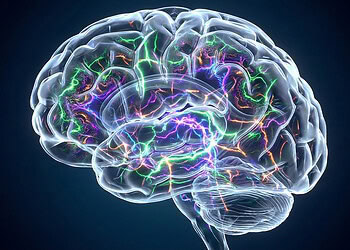
(Image by Gerd Altmann from Pixabay)

(Image by Gerd Altmann from Pixabay)

Share on TwitterShare on Facebook

Lysergic acid diethylamide, or LSD, is a drug which produces a variety of cognitive, perceptual and behavioral changes in users. One of these is distortions in interval timing: one’s perception of (relatively) short intervals and, specifically, the ability to reliably reproduce these intervals (by, for example, switching on a light, pausing, and switching it back off).

To understand whether this temporal effect is separate from or merely a consequence of an altered state of consciousness, researchers from London and Oxford turned to a growing trend among young professionals: LSD microdosing.

Microdosing refers to the consumption of barely perceptible doses of LSD, purported to increase productivity and boost cognition without altering perception. Their results are published in Psychopharmacology.

In the study, 48 healthy adults were invited to participate in a randomized, double-blind, placebo-controlled study and given 0, 5, 10 or 20 micrograms of LSD. The authors measured subjective (perceptual) effects through self-reporting and assessed reproduction of interval timing, using periods shorter and longer than one second.

The results show that the authors were able to successfully induce temporal reproduction inaccuracies in participants without (noticeable) changes in perception, mentation or concentration. Interestingly, these effects were largely restricted to intervals of 2 to 4 seconds.

The authors present some tentative explanations, but underline their speculative nature, as more research is needed to understand the neurochemical interactions of LSD microdosing. For example, attention and working memory, which are “recruited to a greater extent for timing in this interval range”, are both implicated in the discussion. It may be that LSD increases attentional awareness, resulting in the over-reproduction of time intervals.

They additionally evoke the possibility of a dopamine-related effect, specifically via activation of the D2 dopamine receptor. Indeed, previous research has demonstrated an important relation between dopamine and time-keeping. Still, they caution against taking this hypothesis at face value, as D2 interval experiments thus far have been restricted to animals.

Mind-altering drugs present a fascinating method for understanding the brain and behavior. LSD microdosing has been praised by advocates for its ability to improve concentration, cognition, and mood, without causing hallucinations. However, more research like the present study is needed to understand the precise effects of LSD on the brain and mind, both positive and negative, and to develop guidelines for its safe use.

Google News Preferences Add PsyPost to your preferred sources

The study, “The effects of microdose LSD on time perception: a randomised, double-blind, placebo-controlled trial“, was authored by Steliana Yanakieva, Naya Polychroni, Neiloufar Family, Luke T. J. Williams, David P. Luke, and Devin B. Terhune.


Previous Post

A computerized training task reduces negativity bias in social information processing among lonely people

Next Post

Cannabis could help lower the risk of fentanyl exposure among patients in treatment for opioid addiction, study suggests

RELATED

Psychologists developed a 20-minute tool to help people reframe their depression as a source of strength
Psychedelic Drugs

Ibogaine appears to trigger an accelerated “auto-psychotherapy” process during PTSD treatment

February 18, 2026
Surprising new research links LSD-induced brain entropy to seizure protection
LSD

Surprising new research links LSD-induced brain entropy to seizure protection

February 17, 2026
Cannabis use associated with better decision-making skills in people with bipolar disorder
Psilocybin

Low-dose psilocybin reduces weight gain and hyperglycemia in mice fed obesogenic diet

February 16, 2026
Scientists identify key brain mechanism behind ayahuasca’s ability to reduce PTSD symptoms
Ayahuasca

Scientists identify key brain mechanism behind ayahuasca’s ability to reduce PTSD symptoms

February 9, 2026
Lifetime ecstasy use is associated with lower odds of impairments in social functioning, study finds
MDMA

Recreational ecstasy use is linked to lasting memory impairments

February 6, 2026
One specific reason for having sex is associated with higher stress levels the next day
Psilocybin

Psilocybin impacts immunity and behavior differently depending on diet and exercise context

February 4, 2026
Surprising link found between hyperthyroidism and dark personality traits
Depression

Long-term antidepressant effects of psilocybin linked to functional brain changes

January 31, 2026
A dream-like psychedelic might help traumatized veterans reset their brains
Psychedelic Drugs

A dream-like psychedelic might help traumatized veterans reset their brains

January 30, 2026

STAY CONNECTED

LATEST

Psychologist explains why patience can be transformative

Persistent depression linked to resistance in processing positive information about treatment

MCT oil may boost brain power in young adults, study suggests

AI art fails to trigger the same empathy as human works

New research highlights the enduring distinctiveness of marriage

Genetic analysis reveals shared biology between testosterone and depression

Artificial sweeteners spark more intense brain activity than real sugar

Parental math anxiety linked to lower quantitative skills in young children

PsyPost is a psychology and neuroscience news website dedicated to reporting the latest research on human behavior, cognition, and society. (READ MORE...)

  • Mental Health
  • Neuroimaging
  • Personality Psychology
  • Social Psychology
  • Artificial Intelligence
  • Cognitive Science
  • Psychopharmacology
  • Contact us
  • Disclaimer
  • Privacy policy
  • Terms and conditions
  • Do not sell my personal information

(c) PsyPost Media Inc

Welcome Back!

Login to your account below

Forgotten Password?

Retrieve your password

Please enter your username or email address to reset your password.

Log In

Add New Playlist

Subscribe
  • My Account
  • Cognitive Science Research
  • Mental Health Research
  • Social Psychology Research
  • Drug Research
  • Relationship Research
  • About PsyPost
  • Contact
  • Privacy Policy

(c) PsyPost Media Inc