Subscribe
The latest psychology and neuroscience discoveries.
My Account
  • Mental Health
  • Social Psychology
  • Cognitive Science
  • Psychopharmacology
  • Neuroscience
  • About
No Result
View All Result
PsyPost
PsyPost
No Result
View All Result
Home Exclusive Psychopharmacology

Neuroscience study uncovers psilocybin-induced changes in brain connectivity

by Eric W. Dolan
January 20, 2020
in Psychopharmacology
Share on TwitterShare on Facebook

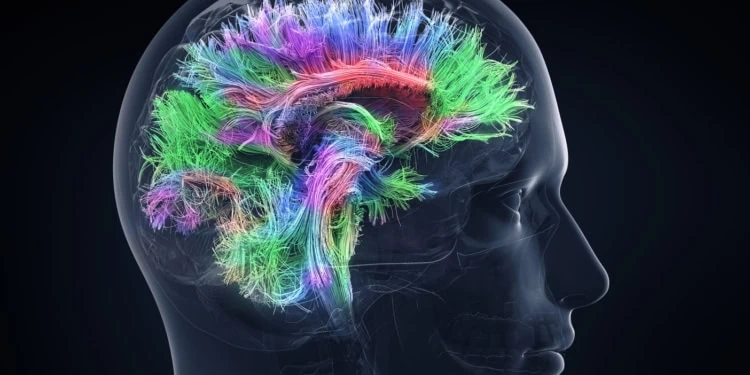
New research published in Biological Psychology sheds light on the neurophysiological underpinnings of the psychedelic experience. The study provides new details about how psilocybin — the active component in “magic” mushrooms — changes the communication patterns between regions of the brain.

“Psychedelics are currently being investigated for the treatment of psychiatric disorders. However, it is still unclear how they change brain activity and connectivity to induce their unique effects,” explained study author Katrin Preller of the University of Zurich and Yale University.

“We therefore conducted a study to investigate the time-dependent effects of psilocybin on brain connectivity and the association between changes in brain connectivity and receptor pharmacology.”

In the study, 23 healthy human participants underwent MRI brain scanning 20 minutes, 40 minutes, and 70 minutes after receiving either psilocybin or a placebo. The researchers observed reduced connectivity between brain areas involved in planning and decision-making but increased connectivity between areas involved in sensation and movement while the participants were under the influence of the psychedelic drug.

Preller and her colleagues conducted a similar study on LSD, and obtained “virtually identical” results.

“Psilocybin – similar to LSD – induced a pattern of brain connectivity that is characterized by increased synchronization of sensory brain regions and decreased connectivity of associative networks,” she told PsyPost.

“Increased sensory processing but altered integration of this sensory information may therefore underlie the psychedelic state and explain the symptoms induced by psilocybin. Furthermore, this pattern of changes in connectivity was closely associated with spatial expression of the serotonin 2A and 1A receptors – pinpointing these receptors as critical for the effects of psilocybin.”

Another drug called ketanserin, a serotonin 2A antagonist, prevented the effects of both psilocybin and LSD, suggesting that changes in brain connectivity caused by these psychedelic drugs are linked to stimulation of the serotonin 2A receptor.

“In this study we investigated different time points from administration to subjective peak effects. Future studies need to investigate how psilocybin impacts brain connectivity during a later phase and post-acutely,” Preller noted.

The study, “Psilocybin induces time-dependent changes in global functional connectivity“, was authored by Katrin H. Preller, Patricia Duerler, Joshua B. Burt, Jie Lisa Ji, Brendan Adkinson, Philipp Stämpfli, Erich Seifritz, Grega Repovs, John H. Krystal, John D. Murray, Alan Anticevic, and Franz X. Vollenweider.


RELATED

Psychedelic use linked to reduced distress, increased social engagement in autistic adults
Microdosing

Microdosing psychedelics linked to better sleep and exercise habits

December 31, 2025
Cannabidiol shows promise for treating Alzheimer’s in mice by targeting brain hyperactivity
Addiction

Cannabidiol may prevent sensitization to cocaine and caffeine by influencing brain structure genes

December 31, 2025
How credible is psilocybin-assisted therapy? Study suggests people are cautious about psychedelic treatment for depression
Psilocybin

Psilocybin shows promise for rapid reduction of cancer-related depression

December 28, 2025
New study claims antidepressant withdrawal is less common than thought. But there’s a big problem
Addiction

Epilepsy drug topiramate shows mixed results for treating combined alcohol and tobacco use

December 24, 2025
Common ADHD medications function differently than scientists previously thought
ADHD

Common ADHD medications function differently than scientists previously thought

December 24, 2025
Hemp-derived cannabigerol shows promise in reducing anxiety — and maybe even improving memory
Alzheimer's Disease

Microdosing cannabis: a new hope for Alzheimer’s patients?

December 22, 2025
Prenatal cannabis exposure linked to early childhood behavioral and cognitive challenges
Alcohol

Smoking cannabis reduces alcohol consumption in heavy drinkers, study finds

December 21, 2025
Single moderate dose of psilocybin linked to temporary reduction in OCD symptoms
Psilocybin

Single moderate dose of psilocybin linked to temporary reduction in OCD symptoms

December 21, 2025

PsyPost Merch

STAY CONNECTED

LATEST

Large study links abdominal obesity to increased risk of migraines

Gen Z reports highest anxiety levels as screen time increases

Scientists demonstrate how reliable news sources are weaponized to spread falsehoods

Rising income inequality predicts longer work hours globally, new research finds

The psychological desire to be the “true” victim predicts anti-democratic attitudes

Microdosing psychedelics linked to better sleep and exercise habits

Marriages are happier when partners find each other without intermediaries, study suggests

Corporate diversity statements can backfire when they become the norm

RSS Psychology of Selling

  • How spotting digitally altered ads on social media affects brand sentiment
  • New research links generative AI usage to improved sales performance and administrative efficiency
  • Brain scans suggest that brand longevity signals quality to shoppers
  • The double-edged sword of dynamic pricing in online retail
  • How expert persuasion impacts willingness to pay for sugar-containing products
         
       
  • Contact us
  • Privacy policy
  • Terms and Conditions
[Do not sell my information]

Welcome Back!

Login to your account below

Forgotten Password?

Retrieve your password

Please enter your username or email address to reset your password.

Log In

Add New Playlist

Subscribe
  • My Account
  • Cognitive Science Research
  • Mental Health Research
  • Social Psychology Research
  • Drug Research
  • Relationship Research
  • About PsyPost
  • Contact
  • Privacy Policy