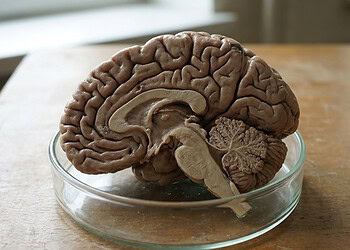
A study of emerging adults who experienced a breakup (dissolution of a romantic relationship) as a traumatic event found heightened reactivity in the hippocampus and amygdala when participants were shown images related to their breakup, including photos of their actual ex-partner. This increased brain activity depended on specific characteristics of the breakup—such as who initiated it or whether participants felt betrayed. The research was published in the Journal of Affective Disorders.
Romantic relationships play a central role in emerging adulthood, a period marked by identity exploration and emotional development. During this stage, many individuals experience their first serious, long-term partnerships, which can offer emotional support, intimacy, and a sense of stability.
However, breakups are also common during this time and can be deeply distressing. Emerging adults may experience intense emotional pain, grief, and lowered self-esteem after a breakup. These events can lead to symptoms of depression, anxiety, and, in some cases, post-traumatic stress—particularly when the relationship was highly meaningful. Breakups may also disrupt trust in future partners or affect beliefs about love and commitment.
At the same time, some individuals experience personal growth and greater clarity about relationship needs. The psychological impact of a breakup depends on several factors, including relationship quality, the circumstances of the breakup, and available social support.
Lead author A.S.J. Van der Watt and colleagues investigated how emerging adults who perceived a breakup as psychologically traumatic responded to breakup-related stimuli in an fMRI scanner. Specifically, they examined blood-oxygen-level dependent (BOLD) responses in the amygdala, hippocampus, and insula—brain regions involved in emotional memory, threat detection, and salience processing. The researchers hypothesized that participants would show increased activation in these areas when viewing breakup-related images compared to neutral ones.
The study included 94 participants aged 18 to 25 who reported experiencing posttraumatic stress symptoms (PTSS). Participants were divided into three groups: 42 who reported a romantic breakup as their most traumatic experience, 20 who identified a physical or sexual assault, and 32 who reported another stressful event that did not meet DSM-5 criteria for trauma. Participants completed assessments of PTSS, depression, childhood adversity, attachment style, and thoughts about their past relationships.
During the fMRI scan, participants viewed a mix of neutral, positive, and trauma-related images. These included stock photos representing relationship breakups or assaults, as well as personal photos of each participant’s own ex-partner. The researchers compared neural responses to these images with responses to neutral images.
Participants who had experienced a breakup showed increased activation in the hippocampus and amygdala when viewing images of their ex-partner, and this pattern of activation was comparable to those who viewed images related to physical or sexual assault. No significant differences were found between the breakup and trauma groups in terms of activation in these brain regions. The insula showed less consistent effects.
The study also found that individual differences affected brain responses. In the breakup group, greater hippocampal and amygdala activation was associated with being the person who did not initiate the breakup, feeling betrayed, or still holding positive thoughts about the ex-relationship. Attachment style, childhood neglect, and sexual orientation were also linked to differences in brain activation.
“RRDs [romantic relationship dissolutions] should be considered as potentially traumatic events. Breakup characteristics are risk factors for experiencing RRDs as traumatic,” the study authors concluded.
The study shows that romantic breakups among emerging adults can be traumatic events. However, the study was conducted on a small group of young adults. Results on other demographic groups might not be identical.
The paper, “Hippocampus, amygdala, and insula activation in response to romantic relationship dissolution stimuli: A case-case-control fMRI study on emerging adult students,” was authored by A.S.J. Van der Watt, S. Du Plessis, F. Ahmed, A. Roos, E. Lesch, and S. Seedat.