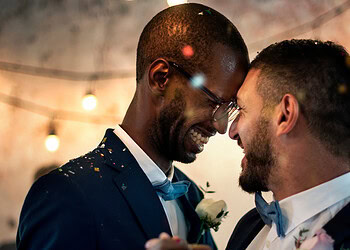
New research published in the Personality and Social Psychology Bulletin finds that a heterosexual identity for men is more precarious than for women. Additionally, it was found that race did not impact judgments about whether an individual’s heterosexual identity was stable.
Specifically, despite research that has found that Black men are more likely to be perceived as heterosexual when engaging in behaviors that challenge heterosexual cultural norms, race did not affect judgments about their sexuality.
Heterosexuality as an identity may not be secure if someone behaves in a way that seems inconsistent with being attracted to the opposite sex. In the United States, men may find their heterosexuality more uncertain than women, because people generally assume that men are straight, and the perception of what it means to be a man has historically been more unstable compared to a female identity.
The research team sought to add an intersectional perspective to their question and explored how the instability of an individual’s heterosexuality is influenced by their gender and race. Christopher Petsko and Stefan Vogler hypothesize that the perception of men’s heterosexuality is more unstable than that of women, which will be amplified when both genders are Black compared to White. Prior research has found that Black men are often perceived as extremely heterosexual, whereas observers may overlook Black women’s same-sex behavior due to their intersectional identity.
To explore their questions, the research team conducted two experiments, which tested whether gender and race affect the perceived fragility of a person’s heterosexuality. The first experiment involved 400 participants, while the second involved 401 participants. Later, the researchers conducted yet another experiment, which included 3,010 participants, to examine the impact of race (Black and White) and gender (man and woman) on the perception of heterosexuality.
Data for the first two experiments were collected via Amazon’s MTurk, while data for the third were collected via NORC’s AmeriSpeak© Panel. The researchers aimed to determine whether men’s heterosexuality is perceived as more precarious than women’s and whether this effect is amplified in specific circumstances.
The results revealed that men who engage in same-sex sexual behavior are viewed as less heterosexual, more bisexual, and more homosexual than women who engage in the same behavior. Surprisingly, the prediction that race may play a role in this process was not found to be correct. The data did not indicate an increased tendency towards a particular race when it came to the targets being either Black or White.
The targets’ race became less relevant than sexual identity when judging sexuality. Neither race alone nor race with gender as a factor had consequences when assessing the behavior of others as either heterosexual or homosexual. In response to this finding, the researchers suggest that “in certain social contexts, one identity may come into perceivers’ focus so strongly that other identities—at least for the moment—fall to the perceptual wayside.”
The research team acknowledged some limitations to their study. For example, the research could not explore the correlation between the precariousness of gender identity vs. sexual identity. In the future, it would be interesting to investigate whether heterosexual behavior is seen as a defining aspect of gender identity, as was proposed, or if it can be dissociated from it. This is an unanswered question that requires further research. One potential drawback of the current experiments is that they use the same approach to evaluate the fragility of sexual identities, which involves a vignette task. Although vignettes are a standard research method, it would be of value to explore how sexual insecurity occurs in more authentic situations.
The study, “Is men’s heterosexuality perceived as more precarious than women’s? An intersectional, race-by-gender analysis“, was authored by Christopher D. Petsko and Stefan Vogler.