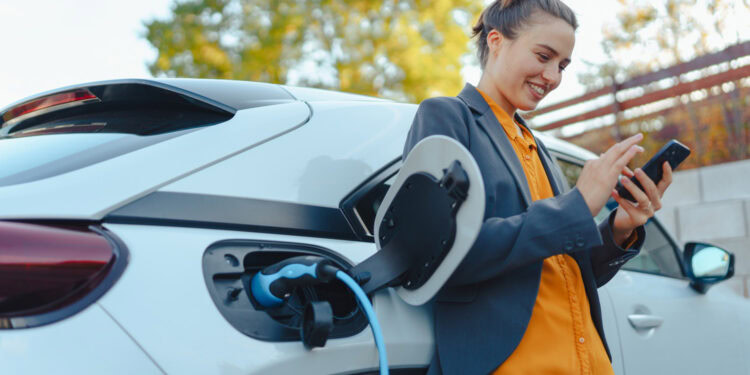

A study published in Travel Behaviour and Society explores the role of gender associations in the adoption of electric vehicles. The research finds that countries with a more feminine cultural orientation tend to have higher rates of electric vehicle adoption. Additionally, a psychological test conducted in Germany shows that consumers, particularly men who are reluctant to buy electric vehicles, implicitly associate them with femininity. These findings suggest that cultural and symbolic perceptions may act as barriers to electric vehicle adoption, particularly among certain consumer groups.
The study was conducted to investigate why the adoption of electric vehicles varies across different countries and among different consumer groups. While economic factors such as price, infrastructure, and government incentives play a role, previous research has suggested that cars are more than just modes of transport—they carry cultural and symbolic meanings. Historically, internal combustion engine vehicles have been associated with masculinity, representing power, speed, and dominance.
In contrast, electric vehicles have been linked to femininity due to their environmental benefits, ease of use, and quieter operation. The researchers aimed to examine whether these gendered associations influence the adoption of electric vehicles at both the national and individual levels.
To explore these questions, the researchers conducted two studies. The first study examined the relationship between cultural values and electric vehicle adoption across 31 European countries using Hofstede’s cultural dimensions, a widely recognized framework for measuring national cultural traits. Specifically, they focused on the masculinity-femininity dimension, which distinguishes cultures that emphasize competition, achievement, and material success (masculine) from those that prioritize care, quality of life, and cooperation (feminine).
To test their hypothesis, the researchers compared each country’s masculinity-femininity score with its electric vehicle market share, controlling for economic and policy factors that could also influence adoption. These included gross national income per capita, car ownership rates, national environmental policies, gasoline prices, and electricity prices.
The findings showed a strong relationship between cultural femininity and higher electric vehicle market share. Countries with lower masculinity scores, indicating a more feminine cultural orientation, had significantly higher adoption rates of electric vehicles. Norway, Iceland, Sweden, and the Netherlands stood out as having both the lowest masculinity scores and the highest electric vehicle market shares.
In contrast, countries with higher masculinity scores tended to have lower electric vehicle adoption rates, suggesting that traditional cultural values emphasizing power and competition might discourage consumers from choosing electric vehicles. Among all the cultural factors analyzed, the masculinity-femininity dimension was the strongest predictor of electric vehicle adoption, even when accounting for economic and policy influences. This suggests that beyond financial and infrastructural considerations, symbolic and cultural meanings of vehicles may play a significant role in shaping consumer behavior at a national level.
For the second study, the researchers shifted their focus from national cultural trends to individual consumer perceptions. They sought to determine whether consumers, particularly in a relatively masculine country like Germany, implicitly associate electric vehicles with femininity and whether this association influences their willingness to adopt the technology. To explore this, they conducted an online survey with 429 German participants, ensuring a representative sample in terms of age and gender.
The study employed an implicit association test (IAT), a psychological tool designed to measure unconscious biases by analyzing how quickly participants associate certain concepts. In this case, participants categorized words and images related to electric and internal combustion engine vehicles alongside words associated with femininity and masculinity. Faster response times indicated stronger implicit associations between concepts.
The results of Study 2 revealed that German consumers generally associated electric vehicles with femininity, though the strength of this association varied significantly by gender and purchase intention. Men exhibited a stronger tendency to link electric vehicles with femininity than women did. More importantly, the men who were least interested in purchasing an electric vehicle displayed the strongest association between electric vehicles and femininity.
This suggests that the perception of electric vehicles as a feminine product may discourage some men from adopting them, particularly those who strongly identify with traditional masculine traits. In contrast, men and women who were open to purchasing an electric vehicle showed much weaker gendered associations, indicating that those already considering electric vehicles may be less influenced by cultural stereotypes.
But there are limitations to consider. First, the research focused only on European countries, so the findings may not generalize to other regions with different cultural and economic contexts. Additionally, the study did not differentiate between different types of electric vehicles, such as luxury models versus compact city cars, which may carry different symbolic meanings.
Future research could explore how marketing and policy strategies can reshape cultural perceptions of electric vehicles and encourage broader adoption. Understanding these cultural and psychological barriers may help policymakers and automakers develop more effective strategies to promote electric vehicle adoption across different consumer groups.
The study, “Perceived lack of masculinity as a barrier to adoption of electric cars? An empirical investigation of gender associations with low-carbon vehicles,” was authored by Jana Plananska, Rolf Wüstenhagen, and Emanuel de Bellis.