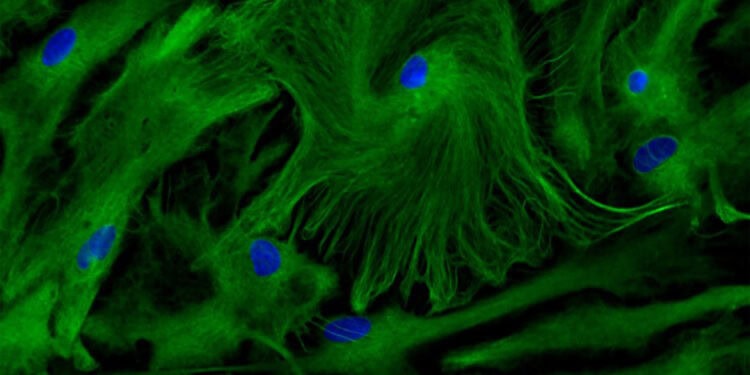

In a new study by researchers at the University of California, Los Angeles (UCLA) Health, a specific group of brain cells known as astrocytes has been found to play a significant role in behaviors associated with various neuropsychiatric disorders. Published in the journal Nature, this research challenges the long-standing belief that neurons are the sole controllers of behavior by highlighting the crucial function of a distinct group of astrocytes located in the central region of the brain, known as the central striatum.
These astrocytes, characterized by their expression of the gene Crym, which encodes for the protein μ-crystallin, have been linked to the regulation of communication between neurons, thereby influencing repetitive behavioral patterns indicative of several neurological and psychiatric disorders.
Astrocytes, star-shaped cells that form the support structure for neural communication networks in the central nervous system, have traditionally been viewed as passive players in brain function. However, this study reveals their active participation in the modulation of neurotransmitter communication at synapses, particularly in behaviors related to perseveration — repetitive or continuous behavior that serves little or no purpose, making it challenging for individuals to switch to other activities. This behavior is a common feature in disorders such as autism, obsessive-compulsive disorder, Huntington’s disease, and Tourette syndrome.
“Several years ago the lab identified that astrocytes in the striatum express Crym. It was my job to find out what it did. By reducing expression of this gene in astrocytes of the central striatum, I uncovered mechanisms related to a specific behavior called perseveration,” said Matthias Ollivier, the study’s first author and postdoctoral scholar at the David Geffen School of Medicine at UCLA.
To investigate the function of Crym-positive astrocytes, the researchers employed a genetic manipulation technique. They reduced the expression of the Crym gene in the central striatum astrocytes of mice, aiming to observe the impact on behavior.
This approach allowed the team to specifically target and alter the function of these astrocytes without affecting the rest of the brain’s cells. The behavior of the genetically modified mice was then meticulously recorded and analyzed, focusing on patterns indicative of perseveration, a form of repetitive behavior seen in various neurological and psychiatric conditions.
Mice with reduced Crym expression in their astrocytes exhibited a significant increase in perseverative behaviors. Specifically, these mice showed enhanced repetitive patterns of activity that served no apparent purpose, such as excessive grooming or difficulty in shifting from one action to another.
This behavior mirrors aspects of human neuropsychiatric conditions like obsessive-compulsive disorder, autism, Huntington’s disease, and Tourette syndrome, suggesting a potential link between Crym-positive astrocytes and these disorders.
Furthermore, the study delved into the biochemical mechanisms underlying these behavioral changes. The researchers discovered that Crym-positive astrocytes in the central striatum play a crucial role in regulating neurotransmitter communication between neurons at synapses.
By altering the expression of μ-crystallin, these astrocytes directly influenced the flow of information within the brain, leading to changes in behavior. This insight into the synaptic mechanism highlights the importance of astrocytes in neural communication networks and their potential as targets for therapeutic intervention.
“At a basic biology level, the study provides evidence that distinct types of astrocytes have important neurobiological functions,” said Baljit Khakh, the senior author of the study and professor of physiology and neurobiology at the David Geffen School of Medicine at UCLA.
Further research is needed to unravel the detailed mechanisms by which μ-crystallin influences brain function and to explore the potential for developing targeted therapies based on these findings.
The study, “Crym-positive striatal astrocytes gate perseverative behaviour,” was authored by Matthias Ollivier, Joselyn S. Soto, Kay E. Linker, Stefanie L. Moye, Yasaman Jami-Alahmadi, Anthony E. Jones, Ajit S. Divakaruni, Riki Kawaguchi, James A. Wohlschlegel, and Baljit S. Khakh.