
A study of young men in China found that administering a single dose of testosterone made participants less sensitive to angry faces, but it had no effect on their sensitivity to fearful expressions. The research was published in Psychoneuroendocrinology.
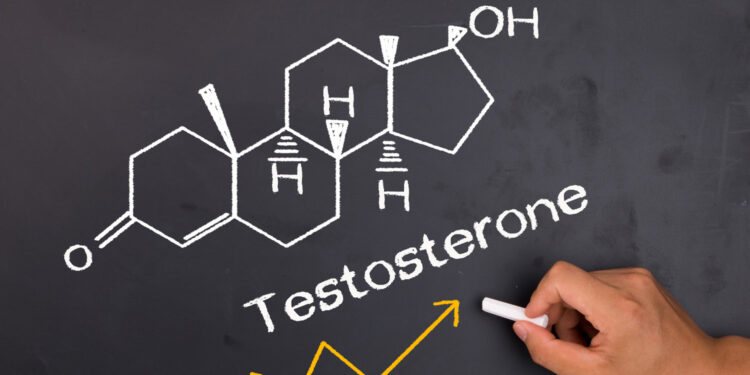
Testosterone is a steroid hormone primarily produced in the testes in males and, to a lesser extent, in the ovaries and adrenal glands in females. It plays a critical role in the development of male reproductive tissues, such as the testes and prostate, as well as promoting secondary sexual characteristics like increased muscle mass and body hair.
Testosterone levels also influence behavior. Studies have shown that increased testosterone levels can enhance aggressive tendencies, particularly in competitive situations or when one’s social status is challenged. Elevated testosterone is also thought to increase risk-taking behaviors, particularly in social and financial domains, making individuals more assertive, dominant, and likely to take leadership roles.
Study author Yu Nan and her colleagues noted that previous research suggested testosterone might increase aggressive and dominant behaviors by reducing an individual’s sensitivity to social threat cues. However, other studies have indicated the opposite. To clarify this, the researchers examined how testosterone administration affected the perception of angry and fearful faces in young men.
The study included 125 healthy men between the ages of 18 and 25, recruited through advertisements at a Chinese university. The participants were divided into two groups: one group received a single dose of gel containing 150 mg of testosterone (Androgel), which a male assistant applied to their shoulders and upper arms.
The other group received a placebo gel, identical in appearance but containing no testosterone, applied in the same way. Neither the participants nor the assistant knew which gel was being administered. Participants were compensated 150 CNY (approximately $21) for their time.
Three hours after gel application, when testosterone concentration was expected to peak, participants completed a task in which they viewed a series of digitally morphed faces. One set of faces displayed varying degrees of anger, while another set showed varying degrees of fear. The faces were morphed to blend emotional expressions with neutral ones to different extents. Participants were instructed to press a key corresponding to the emotion they believed the face represented. Before the main experiment, they practiced the task with a separate set of images.
As expected, the results showed that participants found it easier to recognize anger in faces that were morphed to resemble the original angry expression more closely. Participants who received testosterone were better at recognizing angry faces than those who received the placebo gel.
When it came to recognizing fearful expressions, participants performed better with faces that more closely resembled the original fear expression. However, there were no significant differences between the testosterone and placebo groups in how well they recognized fear.
“By combining computational modeling and psychophysical approaches in an emotion recognition task, we found that exogenous testosterone administration reduces sensitivity to angry facial expressions. The decreased sensitivity to other’s facial threats could lead individuals to misestimate others’ dominance and thus increase one’s own aggressive behavior, a social cognitive mechanism that extends the Challenge Hypothesis,” the study authors concluded.
The Challenge Hypothesis predicts that testosterone levels temporarily increase during contests between males, such as competition for mates or status. These testosterone surges then promote aggressive and dominant behaviors toward male competitors and mating behaviors toward females.
This study sheds light on the effects of testosterone on recognizing anger in others. However, all the participants were young men, and the task involved recognizing emotions in digitally altered images. Future studies on different demographic groups and with more naturalistic emotional stimuli may yield different results.
The paper, “Testosterone administration decreases sensitivity to angry facial expressions in healthy males: A computational modeling approach,” was authored by Yu Nan, Pranjal Mehta, Jiajun Liao, Yueyuan Zheng, Chengyang Han, and Yin Wu.