
Sleep helps stitch memories into cognitive maps, according to new neuroscience breakthrough
Scientists have discovered that forming a mental map of a new environment takes more than just recognizing individual places—it also requires sleep. The study highlights how weakly tuned neurons gradually become synchronized to encode space as a connected whole.
Read moreDetails
Scientists shed light on how forgiveness does and doesn’t reshape memories
A new study suggests that forgiving someone does not make us forget what they did—but it does change how we feel about it. People who forgave recalled past wrongs with just as much detail, but with less emotional pain.
Read moreDetails
Neuroscientists discover biological mechanism that helps the brain ignore irrelevant information
New research suggests the brain uses a learning rule at inhibitory synapses to block out distractions during memory replay. This process enables the hippocampus to prioritize useful patterns over random noise, helping build more generalizable and reliable memories.
Read moreDetails
Reduced memory specificity linked to earlier onset of psychiatric disorders in youth
New research suggests that difficulty recalling specific personal memories may be an early warning sign of mental illness in youth. A meta-analysis finds this memory trait predicts first-time psychiatric diagnoses, especially depression, during adolescence and early adulthood.
Read moreDetails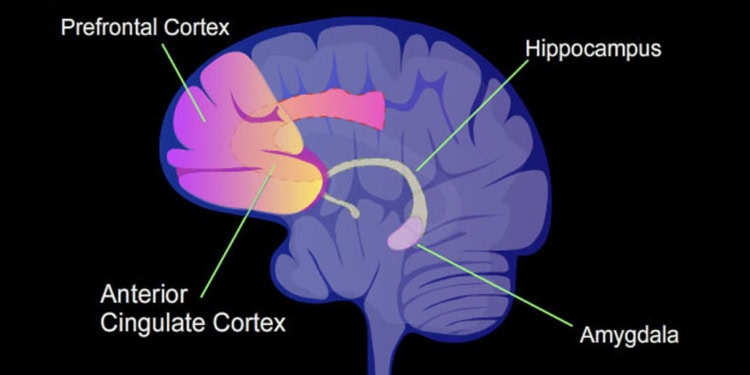
Neuroscientists find individual differences in memory response to amygdala stimulation
Stimulating the brain’s amygdala during memory formation can boost recall after 24 hours, a new study finds. But the effect varies: some people’s memory improves, others’ worsens—and baseline memory performance appears to be the best predictor of outcome.
Read moreDetails
Psychology study sheds light on why some moments seem to fly by
A new study suggests life feels like it speeds up during periods of personal growth and satisfaction. Rather than routine making time seem short, researchers found that fulfilled, nostalgic memories are more likely to make the past feel like a...
Read moreDetails
Neuroscientists discover music’s hidden power to reshape memory
A new neuroimaging study reveals that listening to emotionally charged music during memory recall can change how we remember events. The music not only shaped what participants remembered but also altered the emotional tone of their memories one day later.
Read moreDetails
Your brain doesn’t learn the way we thought, according to new neuroscience breakthrough
Scientists have discovered that the brain learns using more complex and diverse rules than previously thought, reshaping our understanding of memory and learning.
Read moreDetails
Scientists unlock the hidden workings of memory using neurofeedback in rats
Researchers developed a neurofeedback system showing rats can voluntarily activate specific memories, helping isolate brain activity tied to memory retrieval.
Read moreDetails
Emotional arousal can cause memories to blur together—especially in anxious individuals
A new study finds that arousal may cause similar memories to blend together instead of stay distinct.
Read moreDetails
Brain scans reveal how repeated exposure to emotional events shapes memory
Repeated exposure to emotional events leads to stronger memories due to stable brain representations, a new study finds.
Read moreDetails
Chewing wood may boost memory and brain antioxidants, study finds
A new study found chewing wood increased levels of glutathione, a key brain antioxidant, and was linked to better memory in young adults.
Read moreDetails
Fasting after learning might sharpen some memories, but blur others, study suggests
A preliminary study in men showed fasting boosted memory for general knowledge but hindered memory for event context.
Read moreDetails
Exercise boosts memory for up to 24 hours after a workout
Moderate-to-vigorous exercise boosts memory for up to 24 hours in adults aged 50-83, according to new research.
Read moreDetails
Rapid memory consolidation remains intact in autism, new research shows
Ultrafast memory consolidation—brief moments of learning during breaks—works similarly in individuals with and without autism, showing that autistic traits do not disrupt rapid memory stabilization or learning processes.
Read moreDetails