
How stimulating the vagus nerve could protect the brain from Alzheimer’s disease
Alzheimer’s disease pathology begins early in a tiny brain region called the locus coeruleus. Emerging research suggests that stimulating the vagus nerve could help regulate this critical area, potentially preventing memory loss and early cognitive aging.
Read moreDetails
Depressed elderly adults are almost 5 times more likely to develop Alzheimer’s
Older adults diagnosed with depression face a severe risk of cognitive decline. A new longitudinal study reveals that depressed elderly individuals are nearly five times more likely to develop Alzheimer’s disease than their non-depressed peers.
Read moreDetails
High meat consumption may protect against cognitive decline in people with a specific Alzheimer’s gene
Older adults carrying a genetic variation linked to Alzheimer's disease might protect their brain health by eating more meat. A recent study suggests personalized diets based on genetics could help prevent dementia in this large population.
Read moreDetails
New brain scanning method safely tracks how Alzheimer’s drugs work in living patients
A recent study shows that combining magnetic brain scans with computer models can safely measure how dementia medications affect living human brains. This approach could replace invasive tests and speed up the development of new treatments for Alzheimer's disease.
Read moreDetails
Simple blood tests can detect dementia in underrepresented Latin American populations
A recent study shows that accessible blood tests can accurately identify Alzheimer’s disease. When combined with standard cognitive assessments, these tools offer a reliable diagnostic approach for historically underrepresented populations in Latin America.
Read moreDetails
Altered protein shapes in the blood can reveal early stages of Alzheimer’s disease
Researchers have developed a diagnostic panel that identifies cognitive decline by analyzing how blood proteins fold. This method accurately distinguishes between healthy aging and Alzheimer's disease, offering a fresh tool for early detection.
Read moreDetails
Superager brains excel at something scientists once thought was impossible
Older adults with exceptional memories continue to grow new brain cells. A recent study published in the journal Nature shows that this biological process nearly stops in people with Alzheimer's disease.
Read moreDetails
Scientists discover a liver-to-brain signal that mimics exercise benefits
A new study reveals how a liver enzyme shores up the blood-brain barrier. Blocking a specific vessel protein replicated the cognitive benefits of exercise in aging mice and Alzheimer’s models.
Read moreDetails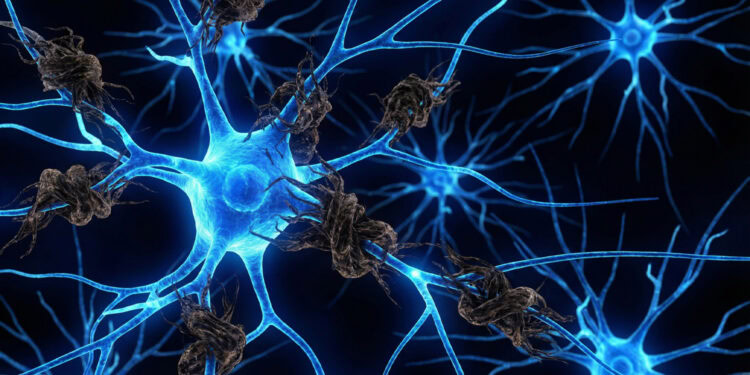
Targeting toxic protein chains could slow neurodegenerative disease
New research reveals that repetitive strings of the amino acid serine can kill brain cells and accelerate the formation of toxic tau tangles associated with Alzheimer’s disease.
Read moreDetails
Why some brain cells resist the toxic proteins linked to Alzheimer’s disease
A genetic screen of human neurons has identified a protein complex that tags toxic tau for destruction. The findings explain why some brain cells are resilient to Alzheimer’s disease while others succumb to degeneration.
Read moreDetails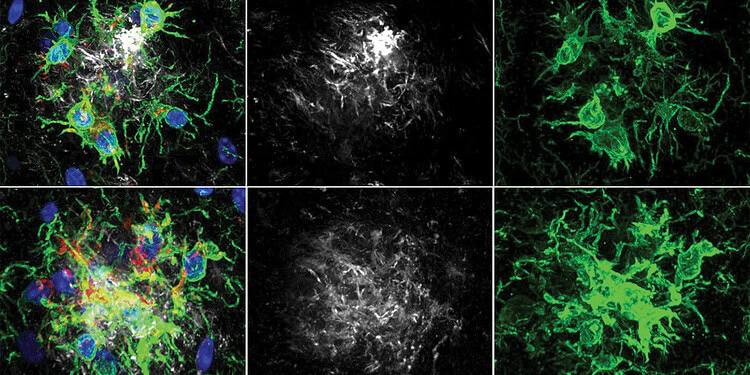
A common enzyme linked to diabetes may offer a new path for treating Alzheimer’s
Scientists have found a way to jumpstart the brain's waste-disposal system. By inhibiting a common metabolic enzyme, researchers enabled immune cells to devour Alzheimer’s plaque and improve cognitive function in mouse models.
Read moreDetailsBiological sex influences how blood markers reflect Alzheimer’s severity
A promising Alzheimer’s blood test requires different interpretation for men and women, according to a new study. Researchers found that at identical protein levels, men experience more severe cognitive decline and brain damage than their female counterparts.
Read moreDetails
The surprising reason why cancer patients may be less likely to get Alzheimer’s
A new study in mice suggests that tumors may inadvertently protect against Alzheimer’s. Researchers found that cancers release a protein called cystatin-C, which crosses the blood-brain barrier to clear toxic amyloid plaques.
Read moreDetails
Cannabidiol prevents Alzheimer’s-like cognitive decline in new rat study
A new study suggests a compound in cannabis could protect the brain from Alzheimer’s disease. Researchers found that treating rats with cannabidiol prevented memory loss and inflammation by activating specific brain receptors.
Read moreDetails
Alzheimer’s patients show reduced neural integration during brain stimulation
A new study uses magnetic stimulation to show that brain complexity drops in early Alzheimer’s disease. The findings suggest the condition may be fundamentally linked to a breakdown in the neural networks supporting consciousness.
Read moreDetails