Brain development patterns predict if childhood ADHD symptoms will fade or persist
New research reveals that physical changes in the brain during adolescence, such as the expansion of the hippocampus, are closely linked to whether a child's ADHD symptoms will fade away, persist, or worsen over time.
Read moreDetails
Higher body mass index in youth linked to altered brain connectivity
Children and teenagers with a higher body mass index exhibit unique brain wave patterns that point to a reduction in neural inhibition. These neurological differences might make it harder for affected youths to alter ingrained dietary habits.
Read moreDetails
Neuroscientists discover the brain’s memory center starts “full” and prunes itself down to optimize learning
Far from a blank slate, the infant brain begins with an overabundance of random neural connections. Neuroscientists discovered how trimming this excess wiring transforms the hippocampus into a powerful, structured memory machine.
Read moreDetails
Brain changes during meditation begin within minutes and peak around the 7-minute mark, study finds
New research shows that a simple breath-watching meditation alters brain activity in just two minutes. These neural shifts peak around the seven-minute mark, providing evidence that even short, daily meditation sessions can offer practical mental health benefits.
Read moreDetails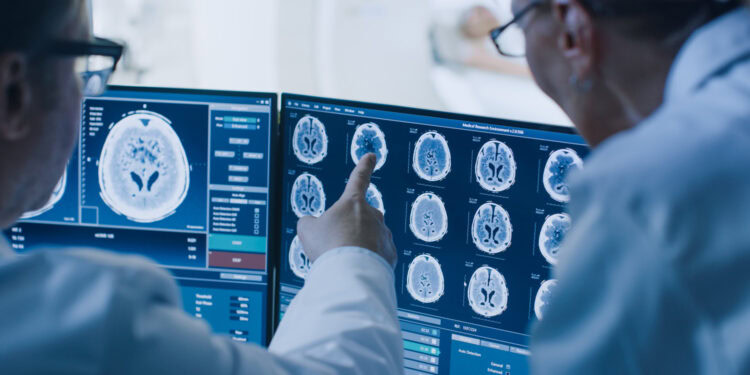
Brain scans reveal how a teenager’s reaction to loss connects impulsivity and suicidal thoughts
A new study suggests that a teenager's brain response to minor setbacks changes how impulsivity relates to future suicidal thoughts. Highly impulsive youth with highly active anterior insula regions faced a higher risk.
Read moreDetails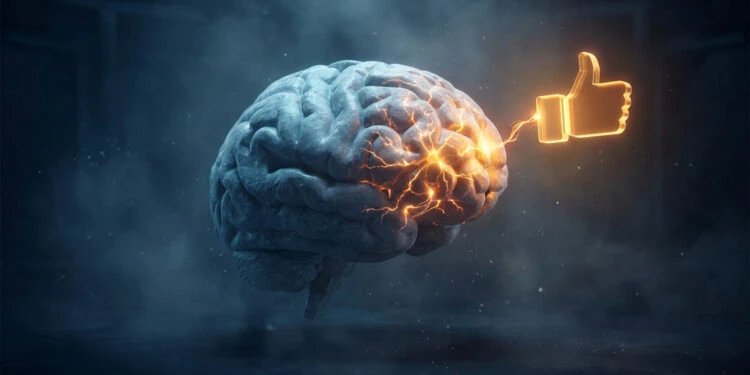
Fear of missing out is linked to hypersensitive brain reactions to digital likes
People who obsess over missing out on social events show hypersensitive brain activity when receiving digital approval, revealing a biological clue behind problematic phone checking and social media habits.
Read moreDetails
Brain connectivity predicts how well antidepressants work compared to placebos
A sophisticated data analysis reveals that while the placebo effect mirrors the trajectory of antidepressant recovery, the actual medication produces a stronger response uniquely linked to a patient's underlying brain circuitry.
Read moreDetails
Brain scans reveal how ibogaine alters neural networks in veterans with head trauma
Special Operations veterans with head traumas experienced notable clinical improvements after taking ibogaine. Brain scans reveal the therapy was associated with lasting increases in cerebral blood flow and the widespread reorganization of neural networks.
Read moreDetails
Scientists reveal the brain’s surprisingly active role in building exercise endurance
New research published in Neuron reveals that physical endurance depends heavily on the brain. Scientists discovered that specific neurons activate immediately after exercise to coordinate muscle adaptation.
Read moreDetails
Scientists discover that dopamine receptors act as traffic signals to guide migrating brain cells
Dopamine isn't just about reward; it's a signaling tool used to build the fetal brain. A new mouse study reveals how early dopamine receptors guide migrating neurons, offering fresh insight into conditions like schizophrenia and autism.
Read moreDetails
Anatomical brain mapping separates structural deviations of violent psychosis from non-violent schizophrenia
A recent study mapped individual brain structures against massive growth charts to explore the anatomy of schizophrenia and violence. The findings reveal a highly diverse range of physical brain abnormalities that group averages have long obscured.
Read moreDetails
Unpredictable childhoods may hinder a young adult’s ability to take positive risks
A new brain-imaging study tracking teenagers over seven years reveals that an unstable home life hinders the development of cognitive control. This neurological change makes them less likely to take positive, career-building social risks in young adulthood.
Read moreDetails
Puberty hormones shape the adolescent female brain before physical changes appear
Researchers have mapped how specific puberty hormones shape the adolescent female brain. The findings reveal that estradiol and testosterone organize distinct neural networks involved in emotion, memory, and spatial awareness long before physical puberty signs appear.
Read moreDetails
Brain cells store competing memories that drive or suppress alcohol relapse
New research reveals that the brain stores competing memories of alcohol addiction and recovery within the same type of cell. This discovery suggests that preventing relapse requires strengthening recovery circuits, not just weakening addiction pathways.
Read moreDetails
Scientists discover a new gut-brain-heart connection that regulates blood pressure
A new study reveals that a specific molecule produced by gut bacteria communicates with the brain to protect the heart. The findings suggest a missing microbial signal contributes to high blood pressure and heart stiffness.
Read moreDetails