
People with narcissistic traits generate more original and malicious ideas for revenge, study finds
When wronged, some people devise highly creative revenge plots. A recent study shows that this "malevolent creativity" is driven less by how provoked a person feels and more by their narcissistic traits and past malicious behavior.
Read moreDetails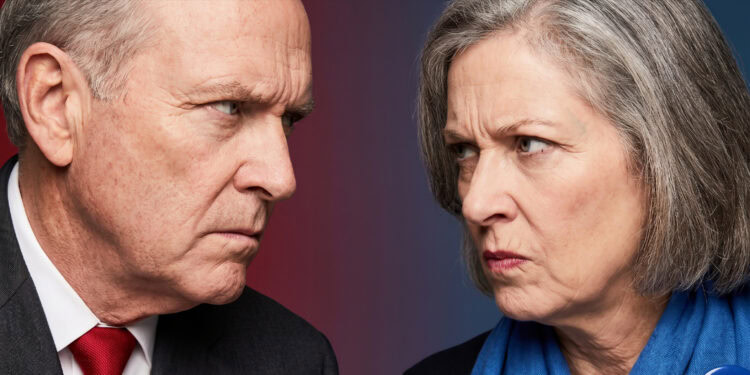
How cognitive shortcuts fuel American political divisions
When voters clash over public policy, their mutual dislike is driven by how recognizable and organized their beliefs are. A new study finds that structured, consistent political views fuel much deeper animosity than moderate or mixed opinions.
Read moreDetails
Study outlines the five-stage pipeline Clavicular used to spread “diagnostic masculinity” and looksmaxxing
How do extreme internet subcultures go viral? Recent research breaks down the spread of "looksmaxxing," showing how influencers use short-form clips, controversy, and "diagnostic masculinity" to turn young men's insecurities into mainstream attention and profit.
Read moreDetails
Study finds AI companions boost mental health while damaging offline connections
Artificial intelligence companions can improve a user’s mental health by simulating empathy. But new research reveals a hidden trade-off: as users grow closer to emotionally intelligent chatbots, they often withdraw from real-world human relationships.
Read moreDetails
Massive review confirms the connection between emotional intelligence and human flourishing
A massive review of psychological research confirms that emotional intelligence is reliably linked to human flourishing. People with higher emotional intelligence tend to experience greater well-being, though the connection depends heavily on how these traits are measured.
Read moreDetails
Comedy is funnier when it is easier to process, new psychology study finds
A new study in the Journal of Experimental Social Psychology reveals that jokes, memes, and punchlines are significantly funnier when they are easy to process. This cognitive fluency helps our brains quickly make sense of unexpected humour.
Read moreDetails
People with unfulfilled romantic needs form stronger attachments to fictional characters
Singles and people unhappy in their romantic relationships are more likely to develop strong emotional and physical attractions to fictional characters, suggesting one-sided media crushes can serve as a substitute for unfulfilled real-world needs.
Read moreDetails
Singlehood is increasingly celebrated among women, but the pressure to couple up persists
"Single positivity" encourages young women to embrace independence, but this cultural approval comes with an expiration date. A new study reveals that as single women age, they face renewed societal pressure to settle down and find a partner.
Read moreDetails
People with more social freedom tend to be more willing to put off immediate gratification
Your willingness to sacrifice immediate joy for long-term rewards isn't just a personality trait. New research shows that living in a society where it’s easy to make new friends boosts your optimism and willingness to delay happiness.
Read moreDetails
A computational model explains the sudden rise in societal division
A new computational model reveals that simply increasing the number of close social connections past a certain threshold naturally forces society to splinter into deeply divided, polarized echo chambers.
Read moreDetails
Focusing on your appearance increases benevolent sexist beliefs in both men and women
A new study finds that when men and women focus on their physical appearance, they become more likely to endorse benevolent sexism. These seemingly positive but restrictive beliefs may act as a coping mechanism for appearance-related discomfort.
Read moreDetails
New research questions the role of fertility in women’s indirect aggression
A new psychological study reveals that women's competitive reactions toward romantic and social rivals are driven by their baseline personality traits. Hormone fluctuations during the menstrual cycle did not predict how women responded to hypothetical threats.
Read moreDetails
Male politicians show a spike in care-oriented language during peak periods of war
A new study of the Israeli Knesset reveals that politicians who use care-based language propose more constructive policies. While women express care more consistently, male lawmakers show a surprising spike in empathy during peak periods of war.
Read moreDetails
The link between dark personality traits and online toxicity is more nuanced than expected
A new study reveals a surprising disconnect: while people with dark personality traits claim to engage in more toxic online behavior, an analysis of their actual Reddit comments shows no measurable link between their personalities and digital footprints.
Read moreDetails
Historical slavery predicts modern mortality gaps between Black and White Americans
A recent study found that U.S. counties with a higher proportion of enslaved people in 1860 have wider mortality gaps between Black and White residents today. This historical legacy is maintained through modern economic and educational disparities.
Read moreDetails