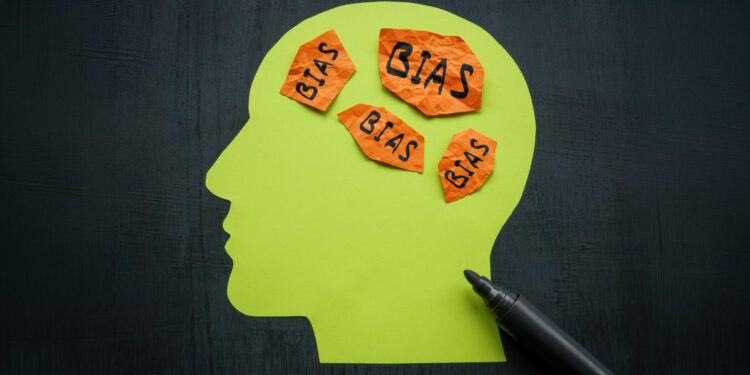
New study challenges the core assumption behind the world’s most widely used implicit bias test
A new study analyzing over 100,000 test sessions suggests the popular Implicit Association Test is driven more by a person's conscious effort to avoid mistakes than by their automatic, unconscious prejudices.
Read moreDetails
Are gender differences really power differences? Large-scale analysis finds strong behavioral parallels
Could the behavioral gap between men and women just be a power gap? New research finds that placing people in powerful roles produces psychological changes that almost perfectly mimic traditional gender differences.
Read moreDetails
A specific thinking style explains why dark personality traits are linked to creativity
Why are traits like narcissism and psychopathy linked to creative success? New research indicates the answer lies in a specific thinking style—one that helps individuals filter out social constraints to focus on novel solutions.
Read moreDetails
Adolescent narcissism brings brief popularity but not likeability among peers, study finds
Teenagers who exhibit narcissistic traits might gain a brief boost in social status, but that dominance does not translate into actually being liked. Researchers tracking adolescents found that early boastfulness predicts a distinct drop in later popularity.
Read moreDetails
Federal science funding cuts push young U.S. researchers to consider moving abroad
Abrupt cuts to federal science funding are threatening the American research workforce. A new survey indicates that early career scientists face severe professional disruptions, pushing many to consider leaving the country or abandoning research entirely.
Read moreDetails
Tracking brain waves reveals a surprising twist in how different generations form social bonds
Getting to know someone can ease loneliness, but new research shows it physically alters brain alignment in surprising ways. When people of different generations make art together, their neural synchronization takes a completely unexpected path.
Read moreDetails
A clever psychological test reveals the subtle detail that makes us want to work harder
A recent study in Psychological Science suggests that human beings have a deep-seated need to feel their actions matter. This drive, emerging as early as age four, motivates us to choose effortful tasks over easy ones.
Read moreDetails
The surprising link between prosocial motivation and dark creativity
Being actively rejected and being silently ignored both cause social pain, but they trigger different forms of dark creativity. A recent psychological study reveals how specific types of social exclusion shape our desire for creative revenge.
Read moreDetails
Researchers tracked 43,000 women for 14 years. Here’s what happened to their political views as gender equality improved.
Psychologists have long assumed that people who favor social equality are permanently wired to criticize political institutions. A large new study reveals that as nations achieve greater gender parity, these egalitarians increasingly defend the political status quo.
Read moreDetails
Getting a smartphone before age 13 linked to worse mental health in young adulthood
Getting a smartphone early in childhood may have lasting consequences. A new study links early phone ownership and social media access to worse psychological well-being, disrupted sleep, and strained family relationships in young adulthood.
Read moreDetails
Shyness makes facial expressions seem more intense, but only in certain cultures
People with higher levels of shyness tend to perceive others' facial expressions as more intense, but a new study indicates this effect depends heavily on cultural background, occurring among young adults in China but not in Canada.
Read moreDetails
Family environments shape authoritarian traits differently than dominance preferences
A large study of twins and their families reveals that authoritarian traits are heavily shaped by upbringing, while preferences for social hierarchy stem from unique personal experiences outside the home.
Read moreDetails
New psychology research reveals why people tend to hide their successes and share their failures
People often adjust what they share about their achievements based on what a conversation partner just revealed. Recent research suggests these choices are driven by an intention to protect the other person's feelings rather than self-presentation.
Read moreDetails
New study reveals how depression twists our perception of fairness
People experiencing depression often view social exchanges through a distorted lens. A new study reveals that depressive symptoms can make unfair financial deals seem more acceptable, but only for those who feel they have high social standing.
Read moreDetails
Scientists thought “intensive parenting” was driving down birth rates. They found the exact opposite.
New research suggests that holding demanding, child-centered parenting attitudes doesn't discourage people from having kids. Instead, embracing these intensive ideals is strongly linked to a greater desire to become a parent or expand a family.
Read moreDetails