
Brain wave monitoring reveals how psychopathic traits disrupt trust and reward in social scenarios
A new experiment using brain wave monitoring shows that people with high psychopathic traits process social trust and financial rewards differently, experiencing intense mental conflict when violating social norms.
Read moreDetails
Psychologists identify a key reason conversations with your partner might be turning negative
A new study in Communication Research reveals how underlying relationship dynamics shape our daily chats. Scientists found that relational doubts increase annoyance during routine conversations, while active support from a partner fosters happiness and positive communication.
Read moreDetails
Liberals hesitate to share progressive causes framed with conservative moral language
A new study finds that liberals are less likely to share progressive causes on social media if the messages use conservative-leaning moral language, while conservatives readily share causes they support regardless of how they are worded.
Read moreDetails
Poor sleep and endless video scrolling form a predictable behavioral loop
Endless short videos can ruin your sleep, but exhaustion might also drive you to keep scrolling. A new study reveals how daytime tiredness acts as a gateway symptom, trapping users in a powerful cycle of media consumption.
Read moreDetails
How racial resentment relates to political conservatism across different White religious groups
A recent study published in the Journal for the Scientific Study of Religion suggests that racial resentment strongly predicts conservative political beliefs among White Americans who are not religiously conservative.
Read moreDetails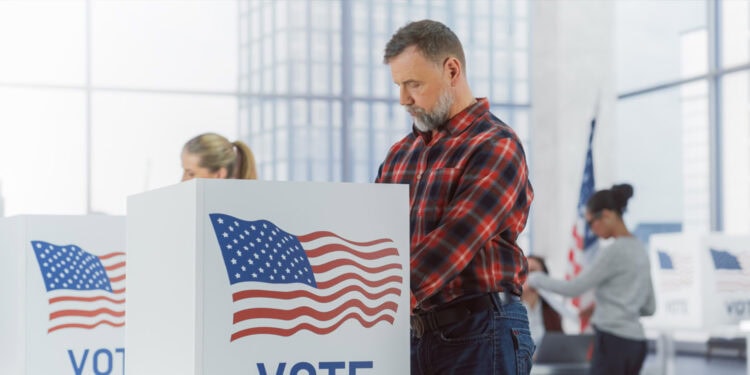
Four decades of data show high-status voters, not the working class, are reshaping American politics
Researchers analyzing 40 years of presidential elections found that affluent, highly educated white voters have steadily moved toward the Democratic Party, challenging the popular belief that working-class voters are solely responsible for modern political realignment.
Read moreDetails
Updating Wikipedia pages boosts public trust in scientific organizations, study finds
When an academic thoroughly updated the American Association for Anatomy's Wikipedia page, readers viewed the organization as more credible. A new study suggests experts should actively edit the platform to improve public access to accurate science.
Read moreDetails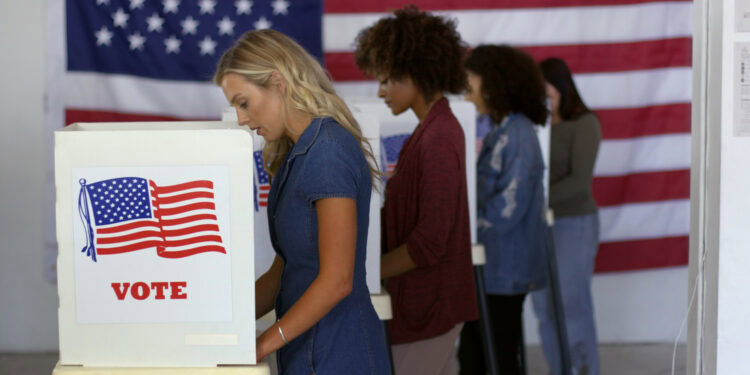
Digital voter suppression ads tied to lower election turnout among specific demographic groups
Targeted social media advertisements designed to discourage voting can impact behavior at the ballot box. A new observational study tracked digital messaging during the 2016 election to measure how customized negative advertising affects offline voter participation.
Read moreDetails
Scientists just revealed a strange quirk in how we exit train stations
Researchers analyzing millions of pedestrian trajectories have identified a "stranger-following effect." The study shows that people exiting trains consistently imitate the path of the person directly in front of them, creating collective "avalanches" of movement that override routing efficiency.
Read moreDetails
Americans systematically overestimate how many social media users contribute to harmful online behavior
Are social media users really as toxic as they seem? A massive new study suggests otherwise, finding that while Americans believe nearly half of all users post hateful content, the true number is actually less than ten percent.
Read moreDetails
Class background influences whether genetic predisposition for intelligence drives you left or right
New research shows that genetic predispositions for cognitive performance can shift our economic views in opposite directions depending on our childhood class background, pushing poor individuals leftward and wealthy individuals rightward.
Read moreDetails
Most people listen to true crime podcasts to learn, but dark personality traits drive different motives
Are you listening to true crime to learn, or to relax? While most fans tune in to understand criminal behavior, new research shows that individuals with dark personality traits actually consume these grim stories for entertainment.
Read moreDetails
Millions of adults in the US have seriously considered shooting someone
Millions of Americans have considered buying a weapon specifically to shoot someone else. By tracking these thoughts, scientists hope to give lawmakers and medical professionals better tools to prevent impulsive ideas from becoming fatal tragedies.
Read moreDetails
Narcissists tend to view God as a punishing figure who owes them special favors
A recent psychology study reveals that individuals with narcissistic traits often use religion as a tool for personal gain. Rather than genuine faith, these individuals engage with spirituality to seek social status, emotional comfort, or special favors from a punitive...
Read moreDetails
Women who out-earn their partners through education face a smaller child penalty
When couples have a child, mothers usually face a persistent drop in earnings compared to fathers. A new study reveals that this financial setback is smaller for women who have more formal education than their partners.
Read moreDetails