![[Adobe Stock]](https://sp-ao.shortpixel.ai/client/to_webp,q_glossy,ret_img,w_750,h_375/https://www.psypost.org/wp-content/uploads/2022/05/neuron-synapses-in-brain-750x375.jpg)
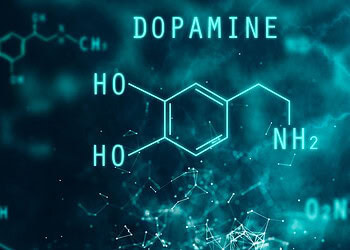
The dopaminergic system appears to play an important but overlooked role in LSD’s effects on consciousness, according to new research published in the journal Psychopharmacology. The findings provide new insight into the neurophysiological mechanisms responsible for the unique effects of psychedelic drugs.
“Psychedelic research is back and making up for lost time after a long period of legal restriction. These drugs produce profound effects on consciousness, offering scientists a powerful tool to try and link brain mechanisms to our subjective experience,” said study author Timothy Long (@lawn_tim), a NIHR Maudsley BRC PhD student at King’s College London.
“Most LSD research so far has suggested it acts on a single target in the brain to produce its effects – the serotonin 5-HT2a receptor. However, it is known to have other targets, including dopamine receptors, but no research has shown that these other targets may contribute to the psychedelic state in humans (the pigs and rodents studied have a hard time explaining what they’re perceiving!). I was really keen to explore these additional receptor systems and how they might relate to the LSD experience.”
For their study, the researchers analyzed previously published data from 15 participants who underwent functional magnetic resonance imaging (fMRI) while under the influence of LSD. Lawn and his research team conducted what is known as a Receptor-Enriched Analysis of functional Connectivity by Targets (REACT), a relatively new technique that utilizes molecular information about the distribution of serotonin and dopamine receptors in the brain.
In line with previous research, LSD appeared to increase functional connectivity in areas of the brain that were rich in serotonin receptors. But Lawn and his colleagues found evidence that LSD also increased functional connectivity in areas of the brain that had a relatively high density of dopamine receptors. Additionally, the researchers found that serotonergic systems were associated with LSD’s effects on visual perception, while the dopaminergic system was associated with LSD’s effects on perceived selfhood and cognition.
“Drugs are really complicated. The brain is even more complicated. As one might imagine, this makes disentangling the effects of drugs on the brain a non-trivial challenge,” Lawn told PsyPost.
“Most studies look at the broad effects of what a drug does to the different networks in the human brain. Sometimes they also block a receptor to see if that prevents the drug’s effects, which would suggest that the receptor is important for mediating them. The problems with these approaches are that the network changes can represent the effects of actions on many different receptors and when you block one receptor, you also block any potential downstream interactions with other receptor systems.”
“By trying to bridge the gap between the receptors that LSD acts on and the network changes it causes, our study provides a new perspective that suggests that dopamine and serotonin receptor systems may be related to different aspects of the psychedelic experience,” Lawn explained.
The new research represents the first attempt to investigate LSD’s effects on receptor-enriched brain networks. But the study, like all research, includes some caveats. The relatively small sample size, for instance, means that the study might not have been able to detect weak associations.
“It will be crucial to replicate these findings in separate larger datasets,” Lawn said. “Additionally, it will be very interesting to see how REACT derived molecular-enriched networks are engaged by other psychedelic drugs with overlapping but also distinct pharmacological profiles – this is something we are very keen to do going forward.”
“Increasing open sharing of psychedelic fMRI datasets, such as the one employed within this study, will significantly increase the scope for application of novel analysis techniques as well as potentially allow for independent validation of findings,” the researcher added. “As the field matures, I hope this will become a more common practice and that will push forward our understanding of these drugs as well as our own brains.”
The study, “Differential contributions of serotonergic and dopaminergic functional connectivity to the phenomenology of LSD“, was authored by Timothy Lawn, Ottavia Dipasquale, Alexandros Vamvakas, Ioannis Tsougos, Mitul A. Mehta, and Matthew A. Howard.