Subscribe
The latest psychology and neuroscience discoveries.
My Account
  • Mental Health
  • Social Psychology
  • Cognitive Science
  • Neuroscience
  • About
No Result
View All Result
PsyPost
PsyPost
No Result
View All Result
Home Exclusive Mental Health

New discovery could be a major advance for neurological diseases

by University of Bristol
February 13, 2017
in Mental Health
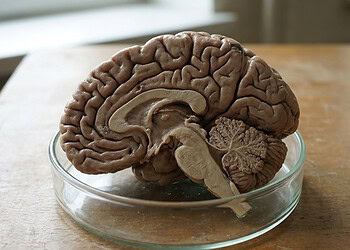
(Photo credit: Mike Seyfang)

(Photo credit: Mike Seyfang)

Share on TwitterShare on Facebook

The discovery of a new mechanism that controls the way nerve cells in the brain communicate with each other to regulate our learning and long-term memory could have major benefits to understanding how the brain works and what goes wrong in neurodegenerative disorders such as epilepsy and dementia. The breakthrough, published in Nature Neuroscience, was made by scientists at the University of Bristol and the University of Central Lancashire. The findings will have far-reaching implications in many aspects of neuroscience.

The human brain contains around 100-billion nerve cells, each of which makes about 10,000 connections to other cells, called synapses. Synapses are constantly transmitting information to, and receiving information from other nerve cells. A process, called long-term potentiation (LTP), increases the strength of information flow across synapses. Lots of synapses communicating between different nerve cells form networks and LTP intensifies the connectivity of the cells in the network to make information transfer more efficient. This LTP mechanism is how the brain operates at the cellular level to allow us to learn and remember. However, when these processes go wrong they can lead to neurological and neurodegenerative disorders.

Precisely how LTP is initiated is a major question in neuroscience. Traditional LTP is regulated by the activation of special proteins at synapses called NMDA receptors. This study, by Professor Jeremy Henley and co-workers reports a new type of LTP that is controlled by kainate receptors.

This is an important advance as it highlights the flexibility in the way synapses are controlled and nerve cells communicate. This, in turn, raises the possibility of targeting this new pathway to develop therapeutic strategies for diseases like dementia, in which there is too little synaptic transmission and LTP, and epilepsy where there is too much inappropriate synaptic transmission and LTP.

Jeremy Henley, Professor of Molecular Neuroscience in the University’s School of Biochemistry in the Faculty of Medical and Veterinary Sciences, said: “These discoveries represent a significant advance and will have far-reaching implications for the understanding of memory, cognition, developmental plasticity and neuronal network formation and stabilisation. In summary, we believe that this is a groundbreaking study that opens new lines of inquiry which will increase understanding of the molecular details of synaptic function in health and disease.”

Dr Milos Petrovic, co-author of the study and Reader in Neuroscience at the University of Central Lancashire added: “Untangling the interactions between the signal receptors in the brain not only tells us more about the inner workings of a healthy brain, but also provides a practical insight into what happens when we form new memories. If we can preserve these signals it may help protect against brain diseases.

“This is certainly an extremely exciting discovery and something that could potentially impact the global population. We have discovered potential new drug targets that could help to cure the devastating consequences of dementias, such as Alzheimer’s disease. Collaborating with researchers across the world in order to identify new ways to fight disease like this is what world-class scientific research is all about, and we look forward to continuing our work in this area.”

Google News Preferences Add PsyPost to your preferred sources
Previous Post

Researchers discover how the brain turns chronic stress into pathological anxiety

Next Post

Scientists biochemically ‘hard-wire’ synapses to create a mouse that resists cocaine’s lure

RELATED

Self-guided mental imagery training shows promise in reducing anxiety
Anxiety

Self-guided mental imagery training shows promise in reducing anxiety

March 15, 2026
Mindfulness may be a window into brain health in early Alzheimer’s risk
Dementia

Intrinsic capacity scores predict the risk of mild cognitive impairment in older adults

March 14, 2026
Women who are open to “sugar arrangements” tend to show deeper psychological vulnerabilities
Dementia

Terry Pratchett’s novels held clues to his dementia a decade before diagnosis, new study suggests

March 14, 2026
Can Acacia catechu and Scutellaria baicalensis extracts enhance brain function?
Depression

Ashwagandha shows promise as a treatment for depression in new rat study

March 13, 2026
New psychology research explores the costs and benefits of consenting to unwanted sex
Anxiety

People with social anxiety are less likely to experience a post-sex emotional glow

March 13, 2026
Scientists observe “striking” link between social AI chatbots and psychological distress
Autism

The extreme male brain theory of autism applies more strongly to females

March 13, 2026
Alcohol dampens reactivity to psychological stress, especially for uncertain stressors
Addiction

Researchers identify personality traits that predict alcohol relapse after treatment

March 12, 2026
Unlocking mitochondrial secrets: New hope for Parkinson’s treatment
Depression

New study links the fatigue of depression to overworked cellular power plants

March 12, 2026

STAY CONNECTED

LATEST

Self-guided mental imagery training shows promise in reducing anxiety

People consistently overestimate the social backlash of changing their political beliefs, new psychology research shows

Watching violent Black video game characters increases unconscious bias in White viewers

Childhood trauma leaves a lasting mark on biological systems, study finds

How dark personality traits predict digital abuse in romantic relationships

Intrinsic capacity scores predict the risk of mild cognitive impairment in older adults

Laughter plays a unique role in building a secure father-child relationship, new research suggests

Scientists just discovered that a high-fat diet can cause gut bacteria to enter the brain

PsyPost is a psychology and neuroscience news website dedicated to reporting the latest research on human behavior, cognition, and society. (READ MORE...)

  • Mental Health
  • Neuroimaging
  • Personality Psychology
  • Social Psychology
  • Artificial Intelligence
  • Cognitive Science
  • Psychopharmacology
  • Contact us
  • Disclaimer
  • Privacy policy
  • Terms and conditions
  • Do not sell my personal information

(c) PsyPost Media Inc

Welcome Back!

Login to your account below

Forgotten Password?

Retrieve your password

Please enter your username or email address to reset your password.

Log In

Add New Playlist

Subscribe
  • My Account
  • Cognitive Science Research
  • Mental Health Research
  • Social Psychology Research
  • Drug Research
  • Relationship Research
  • About PsyPost
  • Contact
  • Privacy Policy

(c) PsyPost Media Inc