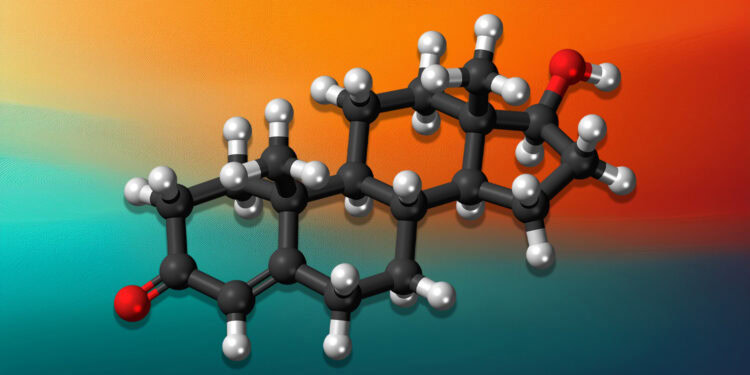

A new study published in Biological Psychiatry: Cognitive Neuroscience and Neuroimaging shows that testosterone affects how men respond to social feedback, making them more sensitive to approval and disapproval from others. The hormone doesn’t just raise or lower self-esteem—it actually changes how much social evaluation influences a person’s moment-to-moment feelings of self-worth.
This research sheds light on how testosterone shapes what psychologists call “state self-esteem”—a person’s temporary sense of self-worth that fluctuates in response to social cues. The results could help explain why men with lower self-esteem sometimes show increased vulnerability to mood disturbances or antisocial behavior. The study also opens the door to potential new treatment strategies that combine hormonal and behavioral approaches to boost mental health.
Self-esteem isn’t static. While people often talk about self-esteem as a fixed trait, psychologists distinguish between trait self-esteem, which reflects someone’s overall self-worth, and state self-esteem, which can rise or fall in response to recent experiences. These fluctuations can have real consequences. People with low or unstable self-esteem are more likely to experience anxiety, depression, and even aggressive behavior.
Men’s self-esteem, in particular, may be more sensitive to changes in social status or perceived rejection. Previous research has suggested that testosterone, a sex hormone known to influence dominance behavior and sensitivity to status, might also affect self-esteem. But the evidence has been mixed. Some studies have shown that testosterone increases self-esteem in certain groups, such as men with low baseline levels, while others have found no clear link.
This study was designed to provide more precise evidence by focusing on how testosterone changes the process of self-esteem updating. In other words, do men on testosterone respond differently when they receive approval or disapproval from others?
The researchers recruited 120 healthy young men, aged 18 to 26, and randomly assigned them to receive either a dose of testosterone gel or a placebo. The study used a double-blind, placebo-controlled design, meaning neither the participants nor the researchers knew who received the real hormone.
After applying the gel, participants waited three hours to allow testosterone levels to rise. They then completed a task designed to mimic real-world social evaluation. Before the experiment, each participant provided personal information used to create a profile. They were told that 184 strangers would view this profile and either approve or disapprove of them.
During the task, participants predicted whether they would receive approval from each “rater” and then received feedback in the form of a thumbs-up, thumbs-down, or no response. After every few trials, they rated how good they felt about themselves at that moment. This rating served as a measure of state self-esteem.
Unbeknownst to the participants, the feedback they received was pre-programmed. Raters were grouped into categories with different approval probabilities: very likely (85% approval), somewhat likely (70%), somewhat unlikely (30%), or very unlikely (15%).
The researchers discovered that testosterone changed how participants formed expectations about social feedback. Men who received testosterone were more optimistic when anticipating approval from high-approval raters, but also more pessimistic with raters known to give negative feedback. In other words, testosterone sharpened the contrast between positive and negative social expectations.
More importantly, testosterone also made men more sensitive to the feedback itself. When men in the testosterone group received positive feedback, their self-esteem increased more than it did in the placebo group. But when they received negative feedback, their self-esteem dropped more sharply.
To better understand these patterns, the researchers used computational modeling. They applied a model that treats self-esteem updating as a learning process—similar to how people adjust their beliefs based on feedback in other situations, like predicting rewards.
The model showed that participants on testosterone gave more weight to two key components: their expectation of social approval and the difference between what they expected and what they actually received, also known as a prediction error. This suggests that testosterone enhances the brain’s attention to social outcomes, making people more responsive to the highs and lows of social evaluation.
Interestingly, while testosterone increased sensitivity to both approval and disapproval, it did not affect the basic learning rate—that is, how quickly people adjusted their beliefs based on prediction errors. Instead, testosterone influenced the importance participants assigned to the feedback and their expectations when forming self-esteem judgments.
These findings help explain why testosterone is often linked with behaviors related to social dominance or status. If testosterone heightens sensitivity to approval and rejection, it could amplify the motivation to seek positive social outcomes—or avoid negative ones.
The results also support the idea that self-esteem functions like a “sociometer,” tracking how accepted or rejected someone feels. Testosterone appears to modulate this system, increasing the emotional impact of social signals.
The study has clinical implications too. Low self-esteem is linked to a variety of mental health issues, including depression, anxiety, and social withdrawal. In some cases, testosterone therapy has been used to treat mood symptoms in men with low testosterone. This study suggests that combining testosterone with positive social environments or feedback-based therapies might improve self-esteem more effectively than either approach alone.
But the study had some limitations. All participants were young men, so it’s unclear whether the findings would generalize to women or to older adults. Some studies have found that testosterone affects men and women differently, especially in social and emotional contexts.
The researchers also did not measure participants’ natural testosterone levels before the experiment. Since baseline levels may influence how people respond to additional testosterone, future studies could examine whether individual differences in hormone levels change the effect of treatment.
Another limitation is the artificial nature of the task. While the social feedback was designed to mimic real-world interactions, participants knew they were in a study and may have reacted differently than they would in daily life. Nonetheless, the task captured meaningful fluctuations in self-esteem and allowed for precise measurement of the psychological processes involved.
Future research could explore how testosterone affects social learning in more natural settings or in people with mental health conditions linked to low self-esteem. It could also investigate whether similar effects occur with other hormones or in response to different kinds of feedback, such as praise from peers or criticism from authority figures.
The study, “Testosterone Administration Increases the Computational Impact of Social Evaluation on the Updating of State Self-Esteem,” was authored by Jixin Long, Junsong Lu, Yang Hu, Philippe N. Tobler, and Yin Wu.