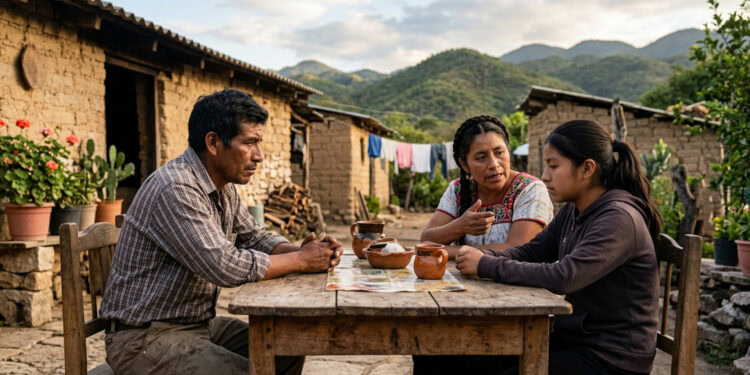

A new study published in Sex Roles reported that rural Mexican parents often explicitly reject machismo and rape myths on surveys, but still reproduce gendered assumptions about risk and responsibility in everyday conversations.
Psychological research on sexual violence has disproportionately focused on Western, educated, industrialized, rich, and democratic (WEIRD) populations, according to researchers Andrea S. Medrano and colleagues. In Mexico, the authors situate sexual violence within a broader context of gender inequality, rural underreporting, limited institutional resources, geographic isolation, and cultural norms surrounding gender. Rural women may face heightened vulnerability because stigma, distrust of authorities, and limited services can make violence less visible and less likely to be reported.
The authors examined how rural Mexican parents understand sexual harassment and rape, and how these understandings are shaped by machismo, caballerismo, and rape myths. The study focused on parents because families are important sites where children learn about gender, safety, responsibility, and risk.
Medrano and colleagues distinguish traditional machismo, which centers male dominance, control, and gender hierarchy, from caballerismo, which emphasizes family responsibility, respect, and chivalry. They were especially interested in whether parents’ survey responses would match the way they talked about sexual violence in interviews.
The team surveyed 200 parents of adolescents who were recruited through two public schools in a rural town in the State of Mexico. Participants had to be at least 18 years old, live in the rural town, and be the parent or primary caregiver of an adolescent enrolled at one of the schools.
Most participants were women, many identified as homemakers, most were living in poverty and had elementary-level education or less. The town itself was small and largely Indigenous. Participants were recruited during monthly parent meetings, with help from school directors and recommendations from other participating families. Parents completed Spanish paper-and-pencil 60-90 minute surveys at the schools between April and May 2021.
Participants reported demographic information, including age, gender, and household income, and two key measures. The Traditional Machismo and Caballerismo Scale, a 20-item measure divided into two 10-item subscales, assessed machismo beliefs, capturing dominance-oriented beliefs about masculinity, power, and gender hierarchy; the caballerismo subscale captured a more relational form of masculinity centered on manners, family responsibility, and emotional connection. Agreement with items was rated on a 1 to 7 scale. Rape myth acceptance was assessed using the Illinois Rape Myth Acceptance Scale-Short Form, which asked participants to rate agreement with statements reflecting common myths about sexual violence on a 1 to 5 scale.
In addition to the survey, the authors conducted in-depth interviews with a randomly selected subsample of 16 parents, 12 mothers and four fathers, who had already completed the quantitative survey. These interviews were conducted in Spanish by the first author and focused on community violence, gendered risk, sexual harassment, rape, and how parents discuss safety with their adolescents.
The researchers were interested in how parents made sense of sexual violence in everyday language. The interviews were part of a broader project on rural Mexican families’ experiences with violence, harassment, mental health, and resilience. Although the interview guide did not directly ask about “rape myths” as a formal concept, questions about neighborhood risk, gendered vulnerability, sexual harassment, rape, and parent-adolescent conversations naturally brought out parents’ assumptions about responsibility, safety, gender, and harm.
The interviews were transcribed in Spanish, translated into English, and checked by bilingual and bicultural research assistants to preserve meaning and cultural nuance. This allowed the authors to compare explicit survey attitudes with the more implicit logics that appeared in parents’ narratives.
Overall, parents did not strongly endorse traditional machismo or rape myths. Men reported higher levels of traditional machismo than women, meaning they were more likely to endorse beliefs tied to male dominance, toughness, and control. However, men and women did not differ significantly in caballerismo, suggesting that the more family-oriented and respect-based version of masculinity was endorsed similarly across genders. Men and women also did not differ significantly in their overall rape myth acceptance scores.
Traditional machismo was linked with greater rape myth acceptance, such that parents who more strongly endorsed dominance-based machismo were also more likely to endorse myths that shift blame away from perpetrators or minimize sexual violence.
Caballerismo, by contrast, was linked with lower rape myth acceptance, suggesting that values centered on respect, family responsibility, and emotional connection may function differently from traditional machismo. The association between traditional machismo and rape myth acceptance was stronger among women, suggesting that women can also participate in transmitting patriarchal beliefs, particularly through family and parenting practices.
Interestingly, parents’ interview narratives often relied on rape-myth logic in subtle ways. Many parents recognized sexual harassment and rape as risks in their neighborhoods, but they often explained those risks through gendered expectations about girls’ behavior, clothing, supervision, or movement in public spaces. Some parents described girls and women as needing to be especially careful, avoid being alone, monitor their surroundings, or behave in ways that reduced risk. Parents also frequently described women as more emotionally affected by violence, while men were portrayed as more resilient or more exposed to general public violence.
The authors identified three major themes. The first was gendered patterns of violence, risk, and vulnerability: parents described men and women as facing different kinds of danger, with women often portrayed as vulnerable in both public and domestic spaces. The second was endorsement and contestation of rape myths: some parents reproduced victim-blaming ideas or minimized certain forms of harassment, while others challenged these beliefs and spoke about consent, boundaries, and respect. The third was parenting and protective socialization: parents described trying to protect their children through gendered advice, teaching daughters vigilance and teaching sons not to be machista or disrespectful toward girls and women.
Taken together, the results show a tension between explicit rejection and implicit reproduction. On formal surveys, parents generally did not endorse high levels of rape myths, but in conversation, many drew on culturally familiar ideas that framed girls and women as responsible for managing risk.
The authors note that standardized measures such as the Illinois Rape Myth Acceptance Scale-Short Form may not fully capture culturally specific rape myths in rural Mexican communities, including beliefs involving maternal blame, victim credibility, and narrow ideas about what counts as “real” rape.
The study, “Machismo, Rape Myths, and Sexual Violence: A Mixed Methods Study of Rural Mexican Parents’ Beliefs and Conversations About Gendered Risk” was authored by Andrea S. Medrano, Courtney M. Medina, Ashley Harvey, Dollar Ganu, and Mayra A. del Carmen.