
Teenage perceptions of household chaos predict mental health challenges in early adulthood
Teens perceiving their homes as chaotic are more likely to face mental health issues in adulthood, including higher levels of depression, anxiety, and antisocial behavior. These effects are independent of family socioeconomic status and parent-reported household chaos.
Read moreDetails
How maternal grandmothers can buffer against childhood adversities
New research suggests maternal grandmothers can significantly reduce emotional and behavioral problems in grandchildren who face multiple early life adversities.
Read moreDetails
Dyslexia’s long shadow: Early reading abilities linked to adult literacy, study finds
Early reading skills in primary school predict adult reading abilities, with dyslexic individuals showing stronger correlations, indicating persistent literacy gaps between typical and dyslexic readers into adulthood.
Read moreDetails
New neuroscience research shows the lasting impact of poverty on language processing
Neuroscientists have found that childhood poverty leaves lasting marks on brain function, altering neural pathways for language processing in adults.
Read moreDetails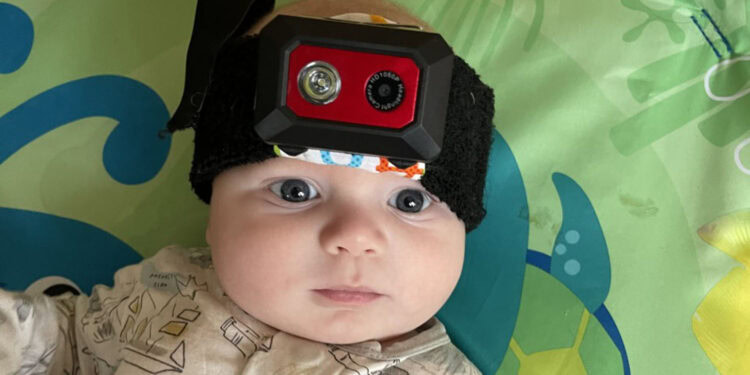
Scientists reveal the unique visual environments of infants
Young infants naturally prefer simple, high-contrast images in their daily lives, such as lights and ceiling corners. This exposure provides essential visual stimuli crucial for their early visual development.
Read moreDetails
Babies in the womb exposed to two languages hear speech differently when born
Newborns of bilingual mothers show greater sensitivity to a wider range of speech sounds compared to newborns of monolingual mothers, suggesting prenatal exposure to multiple languages influences the neural encoding of speech.
Read moreDetails
Study suggests it’s not just phones: All distractions hurt parent-child bonds
Distractions, whether from screens or other sources, equally impair parent-child interactions, reducing parental sensitivity and children's social involvement. The study emphasizes that distraction itself, not just screen use, negatively impacts parent-child communication.
Read moreDetails
Young children are more likely to trust information from robots over humans
Children aged three to six are more likely to trust robots over humans when both sources are equally reliable, according to recent research.
Read moreDetails
Childhood personality traits offer clues to adult entrepreneurial intentions
A new study reveals that extraverted children are slightly more likely to aspire to entrepreneurship in adulthood.
Read moreDetails
Children with autism show different patterns of attention during shared book reading, new study finds
A recent eye-tracking study found that autistic children showed less attention to socially relevant cues and more to background objects during shared book reading, which correlated with their social attention in free play.
Read moreDetails
Parental presence linked to reduced fear activation in children’s brains
Parental presence during fear-inducing scenarios reduces activation in children's centromedial amygdala and medial prefrontal cortex, areas involved in fear processing and emotional regulation, suggesting that parents buffer children's neural fear responses.
Read moreDetails
Social media has a counterintuitive effect on teen socialization, study suggests
Social media use among adolescents does not impair social skills and is linked to increased offline interactions with friends, according to new research.
Read moreDetails
How having conversations with children shapes their language and brain connectivity
Engaging in meaningful conversations with children using strategies like active listening and open-ended questions not only deepens family bonds but also significantly enhances children's language and literacy skills.
Read moreDetails
Scientists observe reduced emotional distress in children living near greenery
A study found that young children living near dense greenery exhibited fewer symptoms of anxiety and depression. This correlation was observed in children aged 2 to 5 but not in older children, suggesting early childhood is a critical period for...
Read moreDetails
Parents’ epistemological beliefs shape children’s scientific reasoning abilities, study suggests
A study in Developmental Science reveals that parents' beliefs about knowledge predict their children's scientific reasoning abilities from kindergarten through elementary school, regardless of educational level or cognitive abilities.
Read moreDetails