
Larger left hippocampus predicts better response to antidepressant escitalopram
New findings published in Translational Psychiatry show that responders to the drug escitalopram start with a larger left hippocampus. As symptoms improve, the volume of the right hippocampus increases.
Read moreDetails
Surprising new research links LSD-induced brain entropy to seizure protection
Scientists have found evidence that LSD inhibits status epilepticus and mortality in mice. The preliminary research suggests the drug works by desynchronizing brain activity.
Read moreDetails
Scientists have found a fascinating link between breathing and memory
New research published in The Journal of Neuroscience suggests breathing acts as a pacemaker for memory. The study found that successful retrieval is linked to the respiratory cycle, synchronizing brain patterns needed to remember.
Read moreDetails
Childhood trauma changes how the brain processes caregiver cues
A new study finds that children exposed to violence show increased activity in the insula when seeing or hearing their parents. This suggests trauma changes how the developing brain processes caregiver signals.
Read moreDetails
Genetic risk for anhedonia linked to altered brain activity during reward processing
A new study published in the Journal of Affective Disorders found that individuals with a higher genetic predisposition for anhedonia show distinct patterns of brain activity when anticipating and receiving monetary rewards.
Read moreDetails
Blue light exposure may counteract anxiety caused by chronic vibration
Researchers have found that blue light exposure lowers anxiety caused by chronic vibration. The study, using zebrafish, reveals that specific light wavelengths boost serotonin and reduce stress hormones like cortisol.
Read moreDetails
Hippocampal neurons shift their activity backward in time to anticipate rewards
A new study published in Nature reveals the hippocampus does more than store memories. Researchers found that neural patterns in mice reorganize over time, shifting activity backward to anticipate rewards before they happen.
Read moreDetails
Neuroimaging data reveals a “common currency” for effective communication
A new mega-analysis of 16 neuroimaging studies reveals that brain activity in reward and social processing regions can predict the success of persuasive messages across diverse contexts, from health campaigns to video advertisements.
Read moreDetails
Why some brain cells resist the toxic proteins linked to Alzheimer’s disease
A genetic screen of human neurons has identified a protein complex that tags toxic tau for destruction. The findings explain why some brain cells are resilient to Alzheimer’s disease while others succumb to degeneration.
Read moreDetails
Scientists identify key brain mechanism behind ayahuasca’s ability to reduce PTSD symptoms
A study in European Neuropsychopharmacology finds that ayahuasca helps rats learn that a previously dangerous environment is safe. This effect appears to rely on BDNF signaling within the infralimbic cortex, suggesting a potential biological pathway for treating trauma.
Read moreDetails
Sex differences in brain volume emerge before birth, groundbreaking research suggests
Researchers have created a detailed model of perinatal brain growth, revealing how white and gray matter trajectories shift during gestation. The study also identifies early sex-based differences in brain structure.
Read moreDetails
The surprising way the brain’s dopamine-rich reward center adapts as a romance matures
A new study published in the journal Social Cognitive and Affective Neuroscience provides evidence that the human brain processes romantic partners differently than close friends, specifically within the reward system. The research suggests that while the brain creates a unique...
Read moreDetails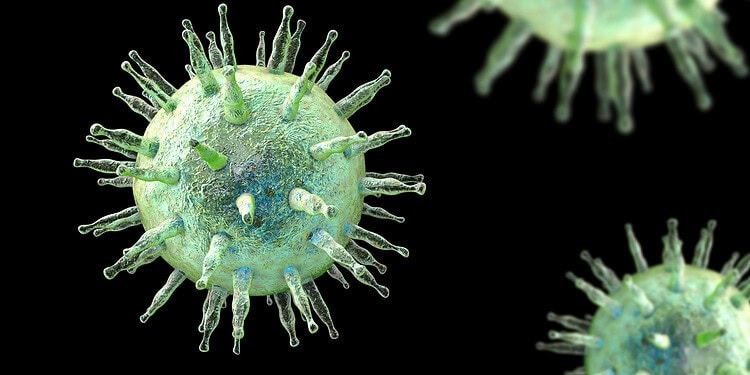
Scientists find evidence of Epstein-Barr virus activity in spinal fluid of multiple sclerosis patients
A persistent viral infection may explain the elusive cause of multiple sclerosis. Researchers found that immune cells abundant in patients' spinal fluid are primed to attack the Epstein-Barr virus, potentially triggering collateral nerve damage.
Read moreDetails
World Trade Center responders with PTSD show signs of accelerated brain aging
Post-traumatic stress disorder may physically age the brain. A study of 9/11 responders indicates that those with the condition display structural brain changes making them appear three years older than trauma-exposed individuals without the disorder.
Read moreDetails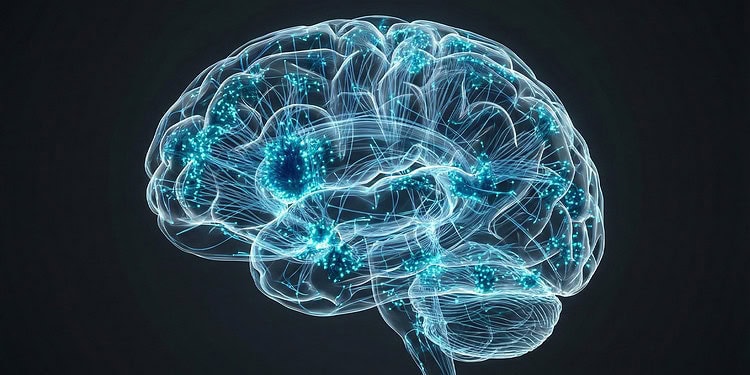
Scientists just mapped the brain architecture that underlies human intelligence
For decades, scientists hunted for a specific "seat" of intelligence. A new analysis of the human connectome suggests they were looking at the wrong scale: intelligence emerges from the global coordination of the entire brain.
Read moreDetails