
TikTok disproportionately served anti-Democratic videos during the 2024 election, study finds
A new study of TikTok’s algorithm reveals a distinct political imbalance. During the 2024 election, the platform consistently exposed users to more conservative and anti-Democratic videos, regardless of their initial political interests or engagement habits.
Read moreDetails
You don’t just think about politics, you physically feel it in your body
A new study reveals that people physically feel political emotions differently than everyday feelings. These unique bodily sensations, like a tense chest, reliably predict whether someone will actually vote, protest, or engage in democracy.
Read moreDetails
Listening to Joe Rogan was a stronger predictor of a Trump vote than watching Fox News
A new two-part study maps how The Joe Rogan Experience evolved from a comedy podcast into a highly influential civic platform, finding that tuning in was a stronger predictor of a 2024 Trump vote than basic party affiliation.
Read moreDetails
Political loser perceptions alter white American views on wealth distribution
When white Americans feel they are losing politically compared to racial minorities, they become more likely to oppose economic redistribution programs. A new study explores how targeted political rhetoric shapes public opinion on government welfare.
Read moreDetails
Liberals hesitate to share progressive causes framed with conservative moral language
A new study finds that liberals are less likely to share progressive causes on social media if the messages use conservative-leaning moral language, while conservatives readily share causes they support regardless of how they are worded.
Read moreDetails
How racial resentment relates to political conservatism across different White religious groups
A recent study published in the Journal for the Scientific Study of Religion suggests that racial resentment strongly predicts conservative political beliefs among White Americans who are not religiously conservative.
Read moreDetails
Four decades of data show high-status voters, not the working class, are reshaping American politics
Researchers analyzing 40 years of presidential elections found that affluent, highly educated white voters have steadily moved toward the Democratic Party, challenging the popular belief that working-class voters are solely responsible for modern political realignment.
Read moreDetails
Digital voter suppression ads tied to lower election turnout among specific demographic groups
Targeted social media advertisements designed to discourage voting can impact behavior at the ballot box. A new observational study tracked digital messaging during the 2016 election to measure how customized negative advertising affects offline voter participation.
Read moreDetails
Class background influences whether genetic predisposition for intelligence drives you left or right
New research shows that genetic predispositions for cognitive performance can shift our economic views in opposite directions depending on our childhood class background, pushing poor individuals leftward and wealthy individuals rightward.
Read moreDetails
Threatening men’s masculinity does not make them more politically conservative, new study finds
For years, psychologists theorized that making men feel insecure about their masculinity drove them toward conservative politics. However, a major new study involving thousands of Americans found no consistent evidence to support this popular idea.
Read moreDetails
The psychological traits that build an extremist personality
A fierce desire for social worth and an inflated sense of group superiority could lay the psychological groundwork for extreme personalities, according to a recent study examining what pushes individuals to sacrifice their well-being for an obsession.
Read moreDetails
Deepfake videos degrade political reputations even when viewers realize they are fake
Artificial intelligence can create deceptive videos that rapidly damage a politician's public reputation. A new study reveals that even when voters realize the footage is manipulated, standard fact-checking efforts fail to undo the lingering emotional harm.
Read moreDetails
Fox News viewership linked to belief in a racist conspiracy theory
A regular diet of Fox News is strongly associated with white Americans embracing the Great Replacement Theory. By tracking viewers over time, researchers discovered that increasing media consumption directly correlates with rising support for the xenophobic conspiracy.
Read moreDetails
Perceived grievance and psychological distress are linked to left-wing authoritarianism
While authoritarianism is often associated with the political right, new research shows it exists on the extreme left, too. These rigid views are closely tied to a focus on social grievance and underlying psychological distress.
Read moreDetails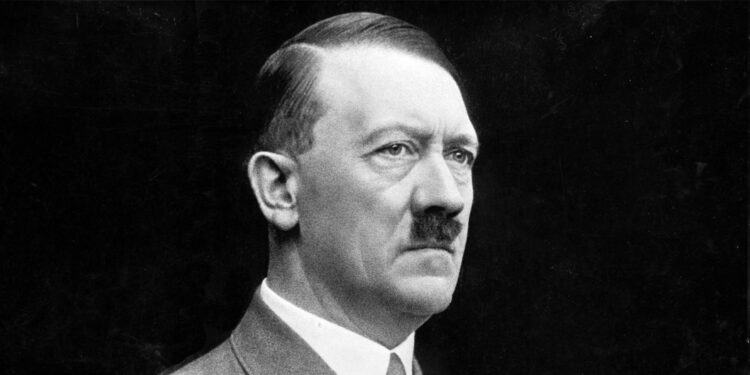
New study shows how Nazi-era propaganda influences present-day attitudes
Decades after the Nazi regime, their propaganda still holds psychological power. A recent study reveals that viewing glorifying photos of Adolf Hitler softens the guilt and shame modern viewers feel about past atrocities.
Read moreDetails