
How parent-child political disagreements harm relationships and individual mental health
A recent study suggests political disagreements within families lead to psychological distress by breaking down positive communication. Researchers found that even politically neutral family members can become targets of moral outrage in highly polarized environments.
Read moreDetails
Donald Trump’s 2024 election win increased the social acceptability of prejudice, study suggests
A new study published in the Personality and Social Psychology Bulletin reveals that Donald Trump's 2024 election coincided with changing social norms. Specifically, negative campaign rhetoric predicted a growing public acceptance of prejudice toward targeted minority groups.
Read moreDetails
Left-wing authoritarians use egotistical social tactics more often
A new study reveals that left-wing authoritarians frequently use egotistical tactics to manage their social image. Right-wing authoritarians are less likely to use these strategies, unless their beliefs are driven by aggression or submission.
Read moreDetails
Rising number of Americans report owning firearms for protection at public political events
A new study published in Injury Epidemiology reveals that while fewer Americans own guns to advance political goals, more are carrying them for protection at rallies. This shift is particularly notable among Republican gun owners following the 2024 election.
Read moreDetails
High IQ men tend to be less conservative than their average peers, study finds
Do gifted individuals see the world differently? Research tracking adults over 35 years finds their political orientations are remarkably average, with one specific exception regarding male conservatism.
Read moreDetails
Trump support in 2024 linked to White Americans’ perception of falling to the bottom of the racial hierarchy
New data from the 2024 election reveals a specific profile of Trump supporters: White Americans who believe they are in a "tight race" for status with Black and Hispanic Americans, regardless of their actual wealth.
Read moreDetails
Donald Trump is fueling a surprising shift in gun culture, new research suggests
A new study suggests that the 2024 presidential election prompted Black adults and liberals to change their firearm habits. These groups reported stronger urges to carry weapons and store them for quick access due to safety concerns.
Read moreDetails
Evolutionary motives of fear and coercion shape political views on wealth redistribution
Support for redistributing wealth may stem from deep evolutionary instincts to avoid conflict. New studies reveal that the fear of being violently dispossessed and a desire to enforce equality are key predictors of progressive policy preferences.
Read moreDetails
Support for banning hate speech tends to decrease as people get older
New research indicates that while support for banning hate speech depends largely on how old you are, the recent drop in support for general free speech is a societal shift affecting everyone equally.
Read moreDetails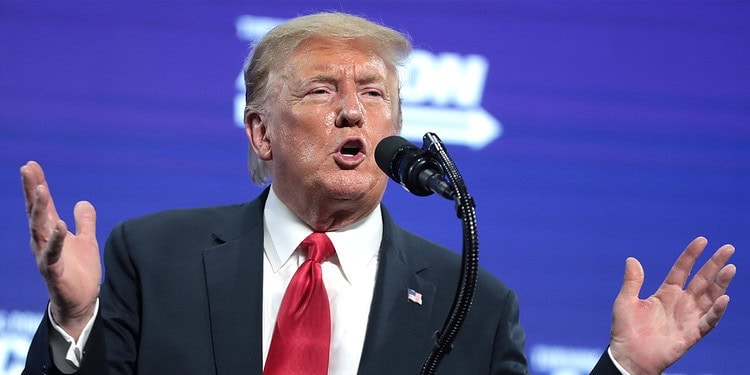
Trump-related search activity signals a surprising trend in the stock market
A new study suggests that online attention paid to Donald Trump helps predict optimism on Wall Street. Researchers found that spikes in Google searches for the president tend to precede increases in bullish sentiment among individual investors.
Read moreDetails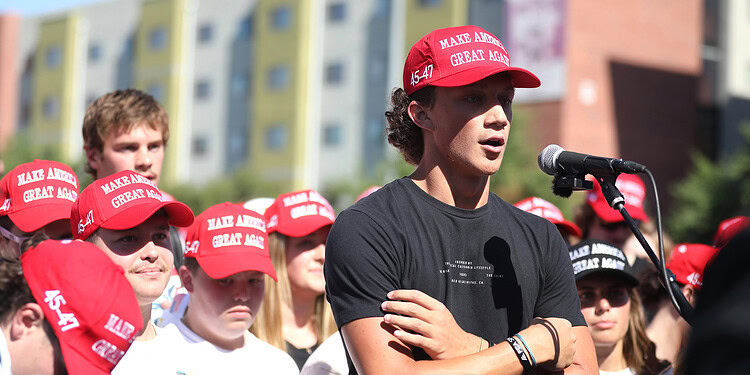
Conservative college students don’t face greater barriers to campus resources
A new field experiment suggests university administrators are just as responsive to conservative students as they are to liberals. The findings challenge widespread narratives about systemic political discrimination.
Read moreDetails
New research reveals the policy recall gap that gave Donald Trump a hidden edge
While Hillary Clinton had a detailed platform, it didn't stick. A new study finds that nearly 40% of Democrats in 2016 couldn't name a single Clinton policy they felt would help them, while Trump’s base clearly understood his promises.
Read moreDetails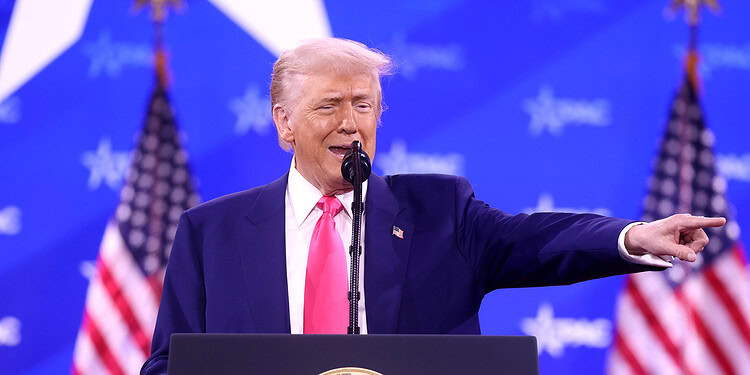
Donald Trump weaponizes humor through “dark play” to test boundaries
Humor has evolved into a tool for political aggression and deception, according to new research. The analysis reveals how Trump and Ocasio-Cortez weaponize comedy to attack opponents and mask controversial ideas.
Read moreDetails
General anxiety predicts conspiracy beliefs while political anxiety does not
Researchers have discovered that everyday nervousness is linked to conspiracy theory endorsement, while stress regarding elections and polarization is not. This challenges the assumption that political anxiety drives conspiratorial thinking.
Read moreDetails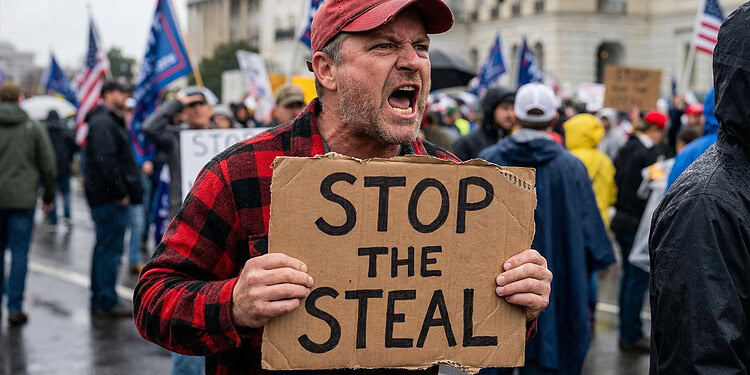
People who support authoritarianism tend to endorse election conspiracy beliefs
A new study finds election conspiracy theories don't necessarily cause democratic backsliding. Instead, people who already support authoritarianism are more likely to embrace conspiracy beliefs.
Read moreDetails